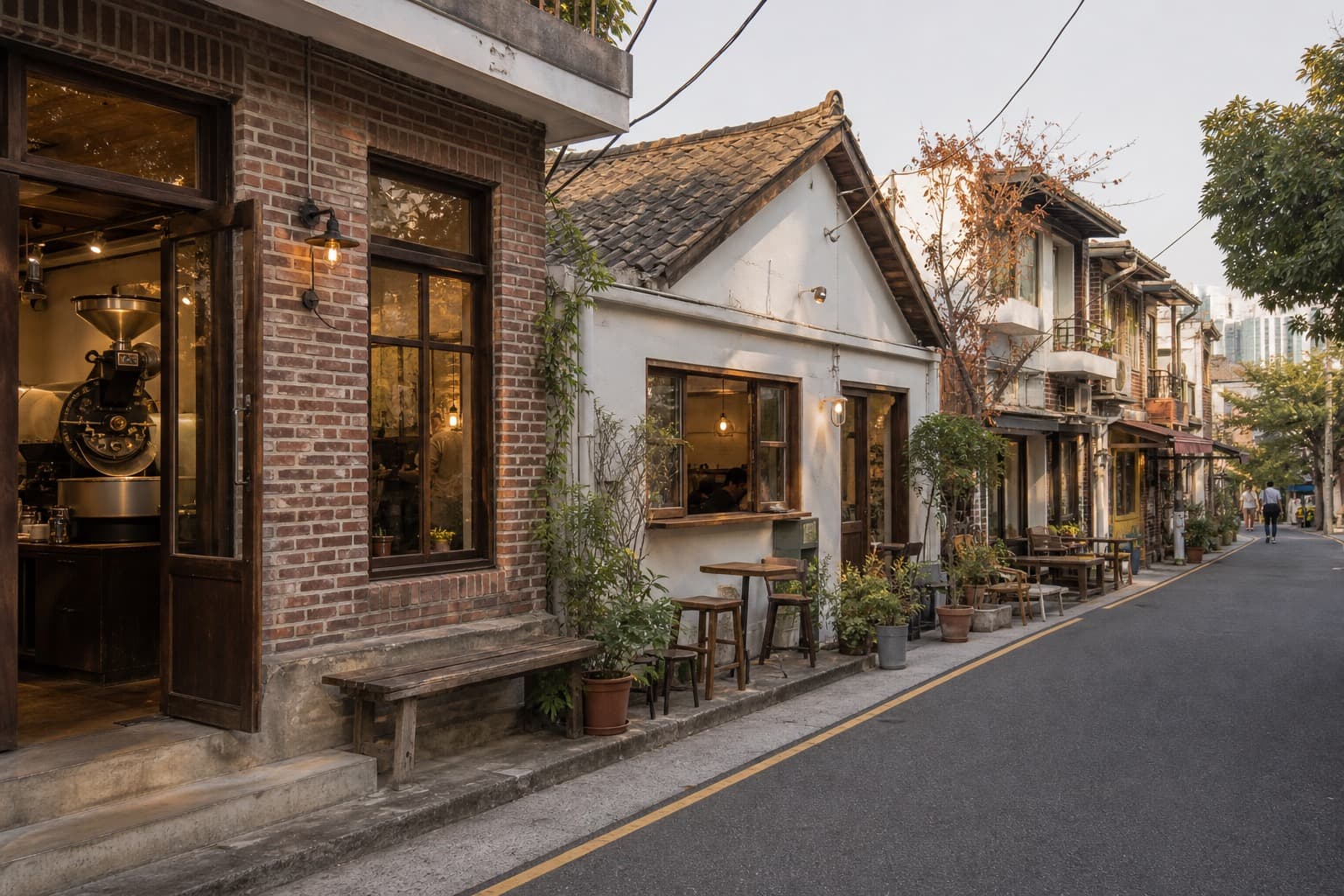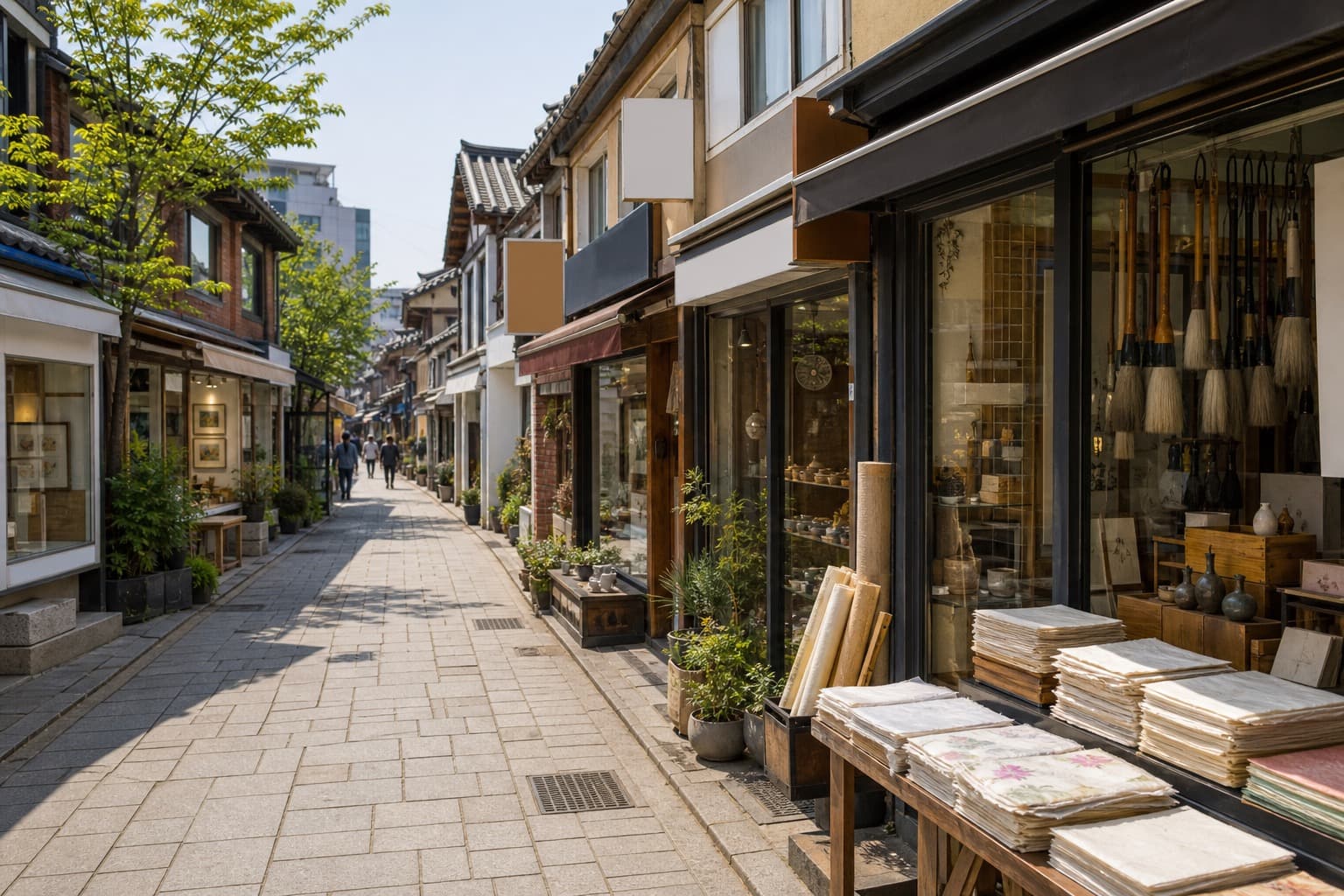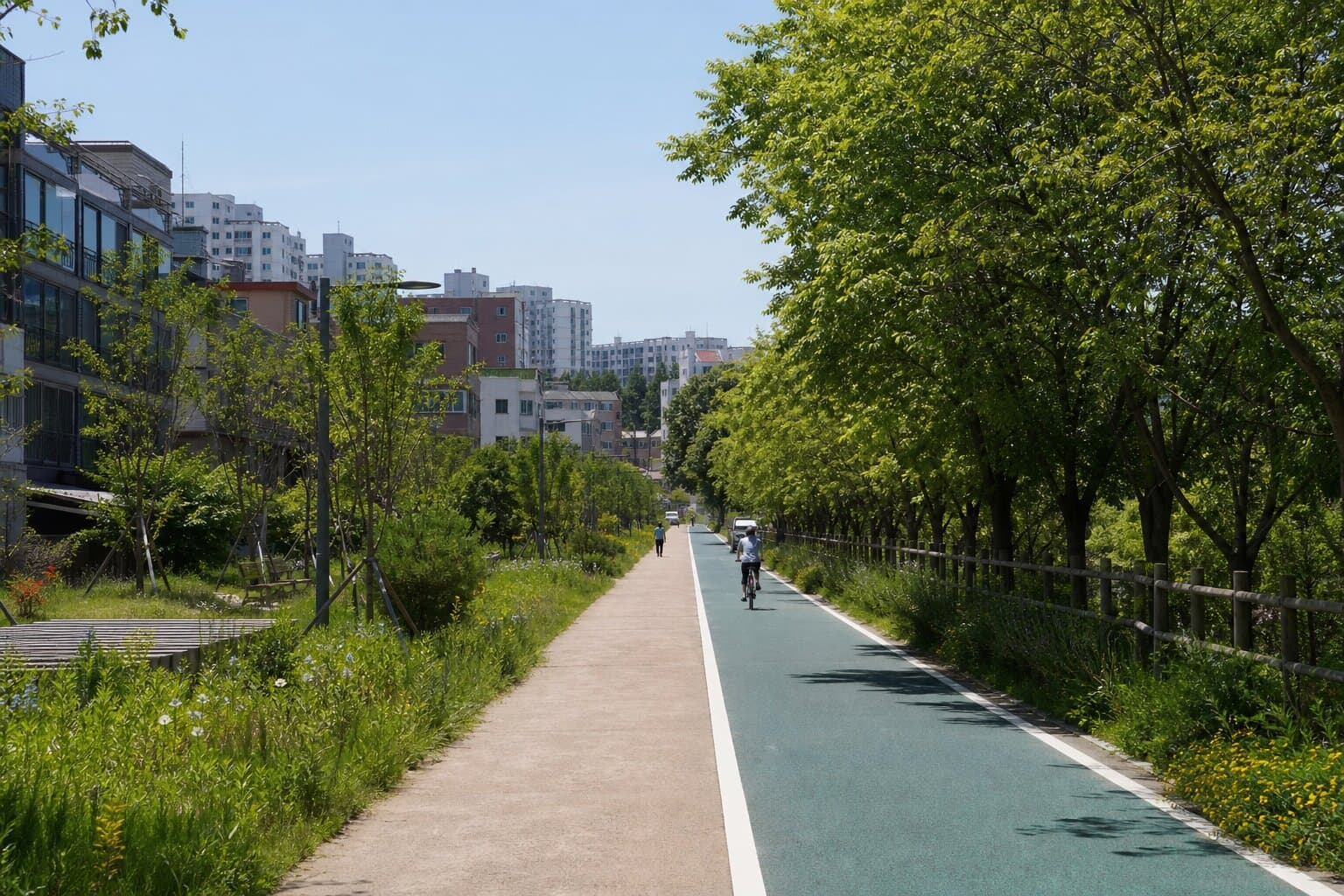
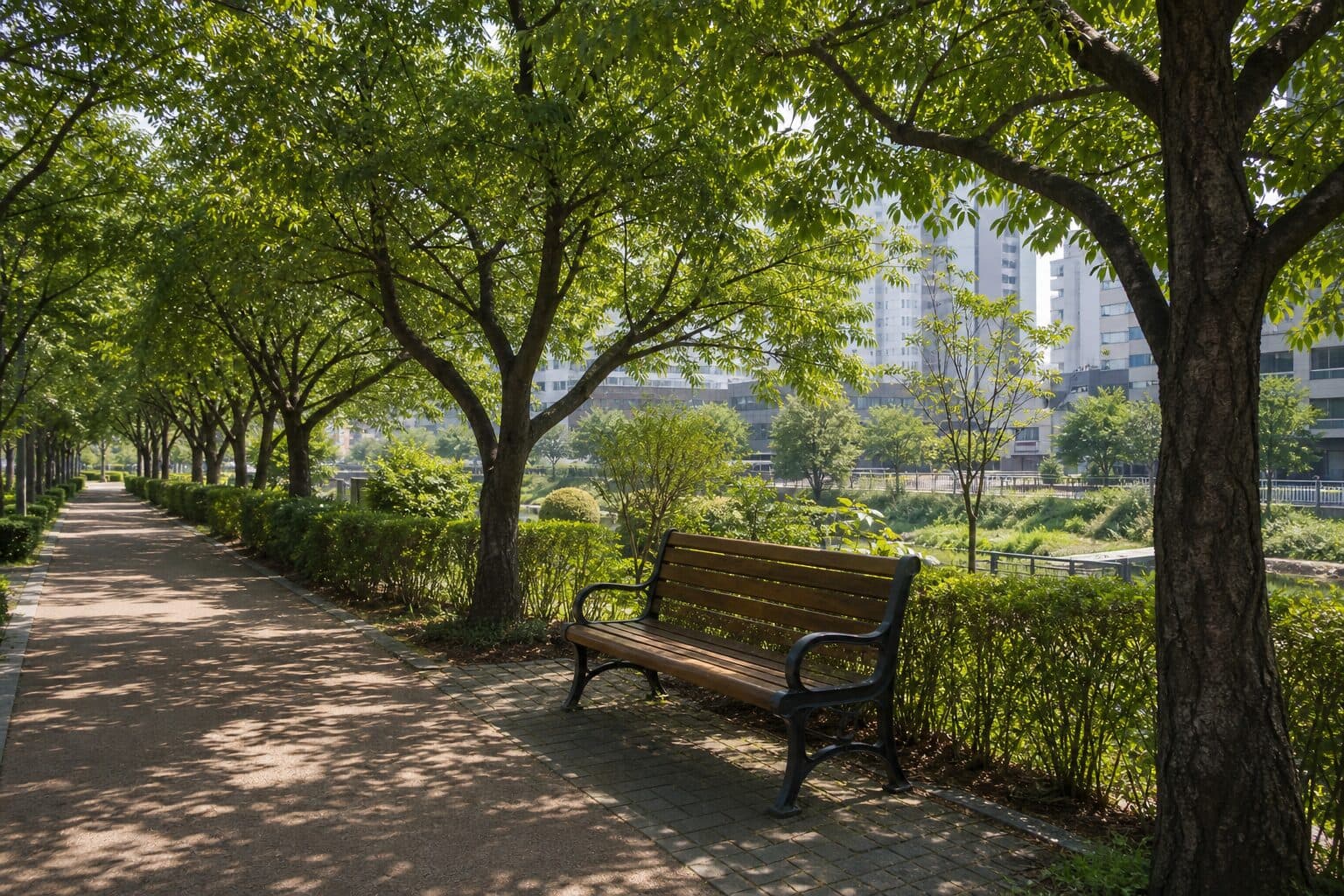
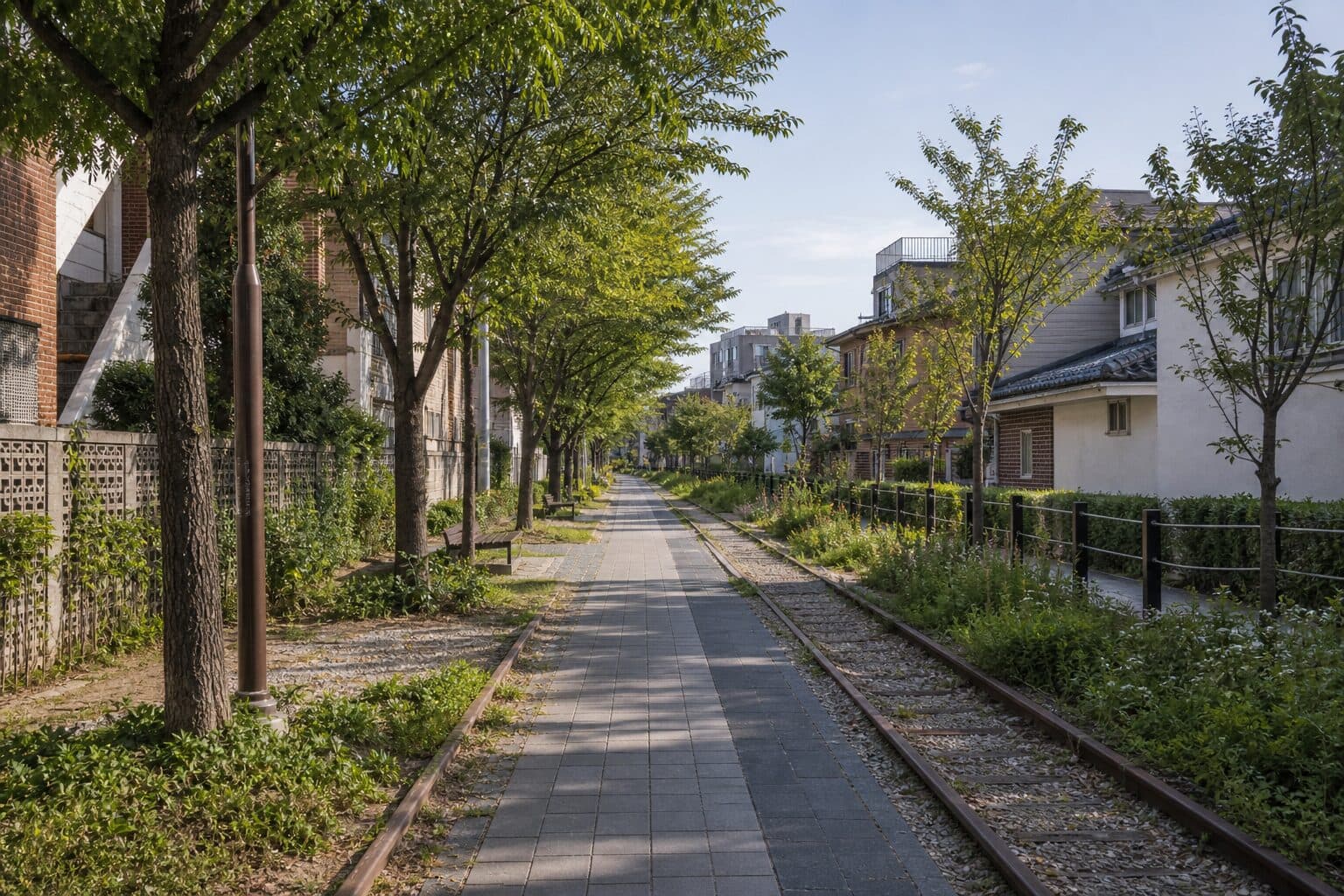
A linear city park made from a former rail line. Homes, cafes, and small plazas connect into a route that feels more everyday than touristy.
“Pureun-gil is the path people slowly made where trains disappeared.”
This is a neighborhood activist involved in Pureun-gil from its early community meetings. He went to school beside the old rail line and worried when the empty strip began turning into parking after the trains disappeared. “Pureun-gil is the path people slowly made where trains disappeared,” he says, asking visitors to notice not only the straight route but the chairs and small flowerbeds placed by residents. On the first Saturday each month he walks with three trash bags and tongs, showing children the sections where old rail markings remain. He adds, “A park is not completed; it is repaired by being used every day.” One summer night, residents hung 20 bulbs and held a tiny concert, and that spot has served as a meeting point ever since.
Philosophy
What this place protects
Do not erase the rail trace; turn it into an everyday walk. Residents' chairs and flowerbeds accumulate along the straight line.
Behind the Signature
The signature is walking one segment without a destination. As a linear park, it can begin anywhere; the path itself connects neighborhoods.
Gallery
Look around
Practical
The route is long; use a map app for the nearest entry and walk one or two transit stops.
A free everyday park. Bikes and walkers share it, so mind the edges.
Spring flowers, summer night walks, autumn leaves, and clear winter mornings all suit the greenway.