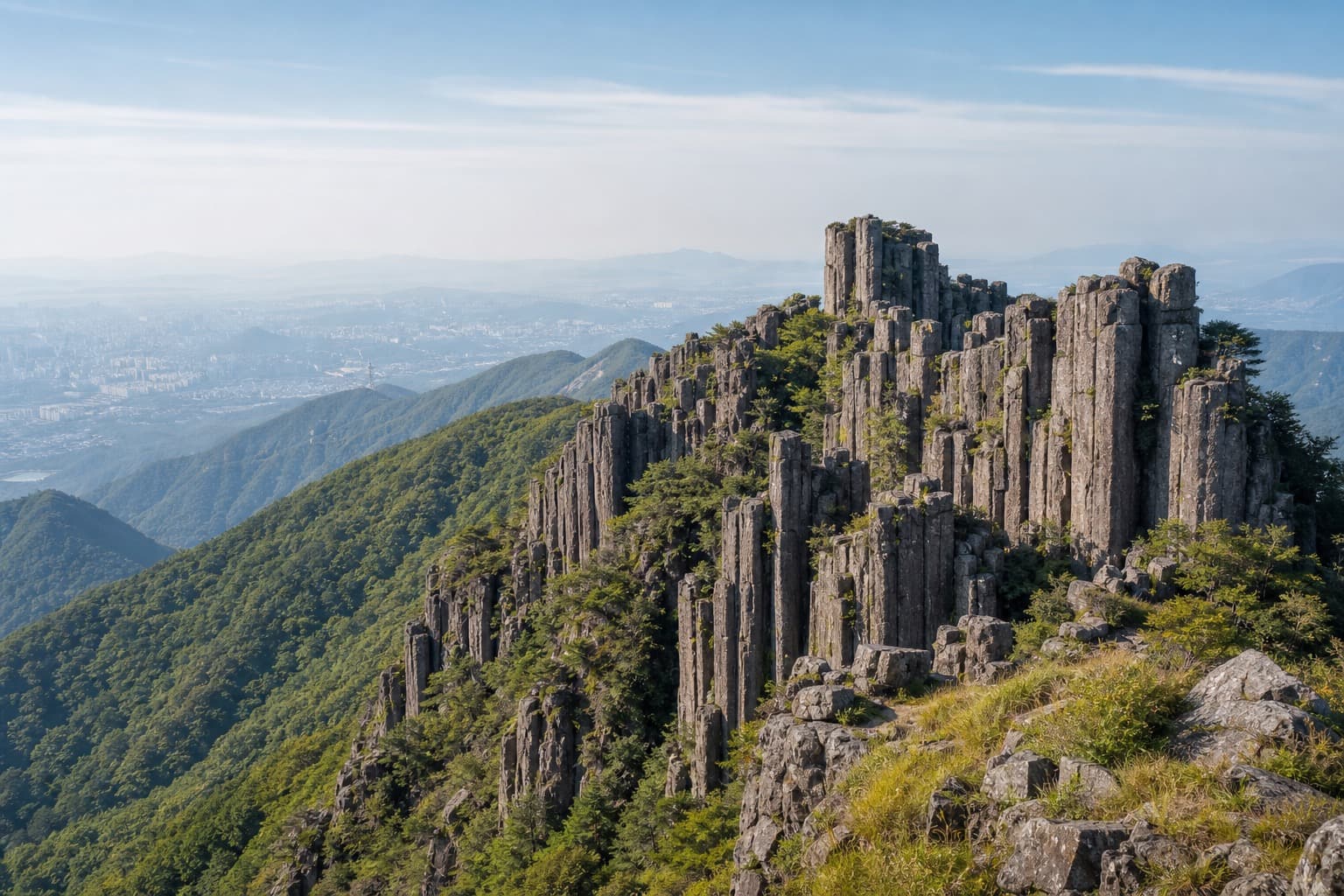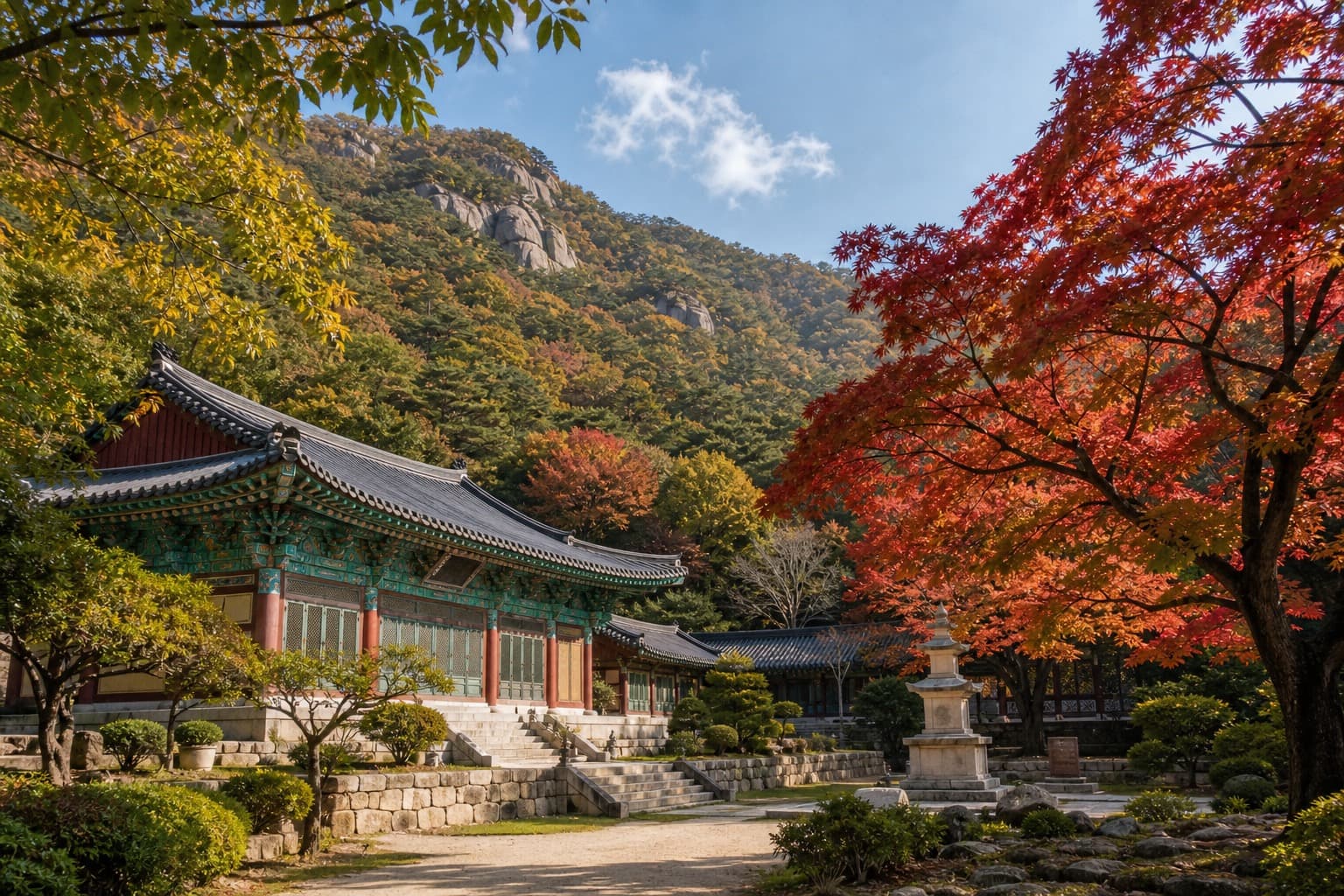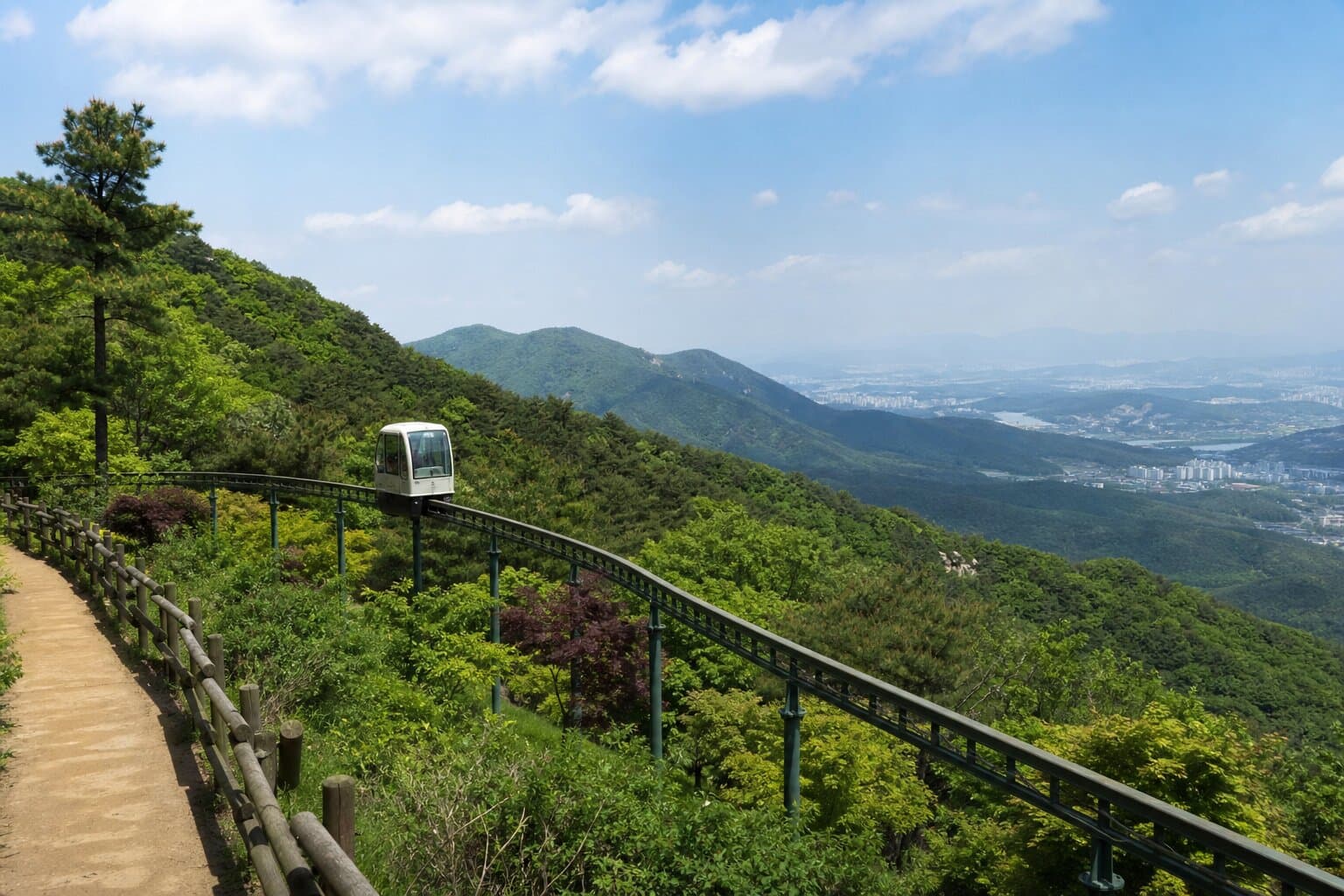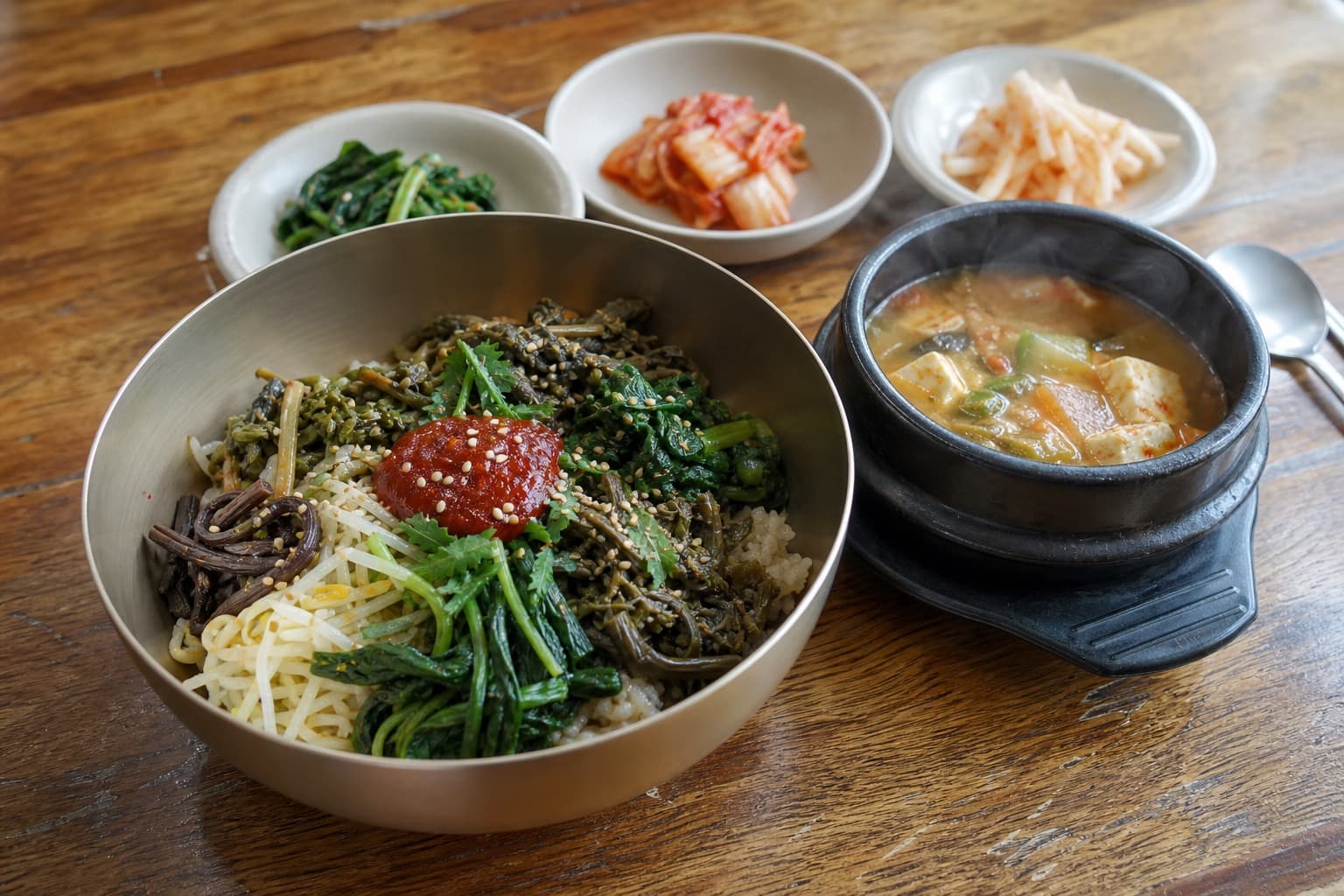
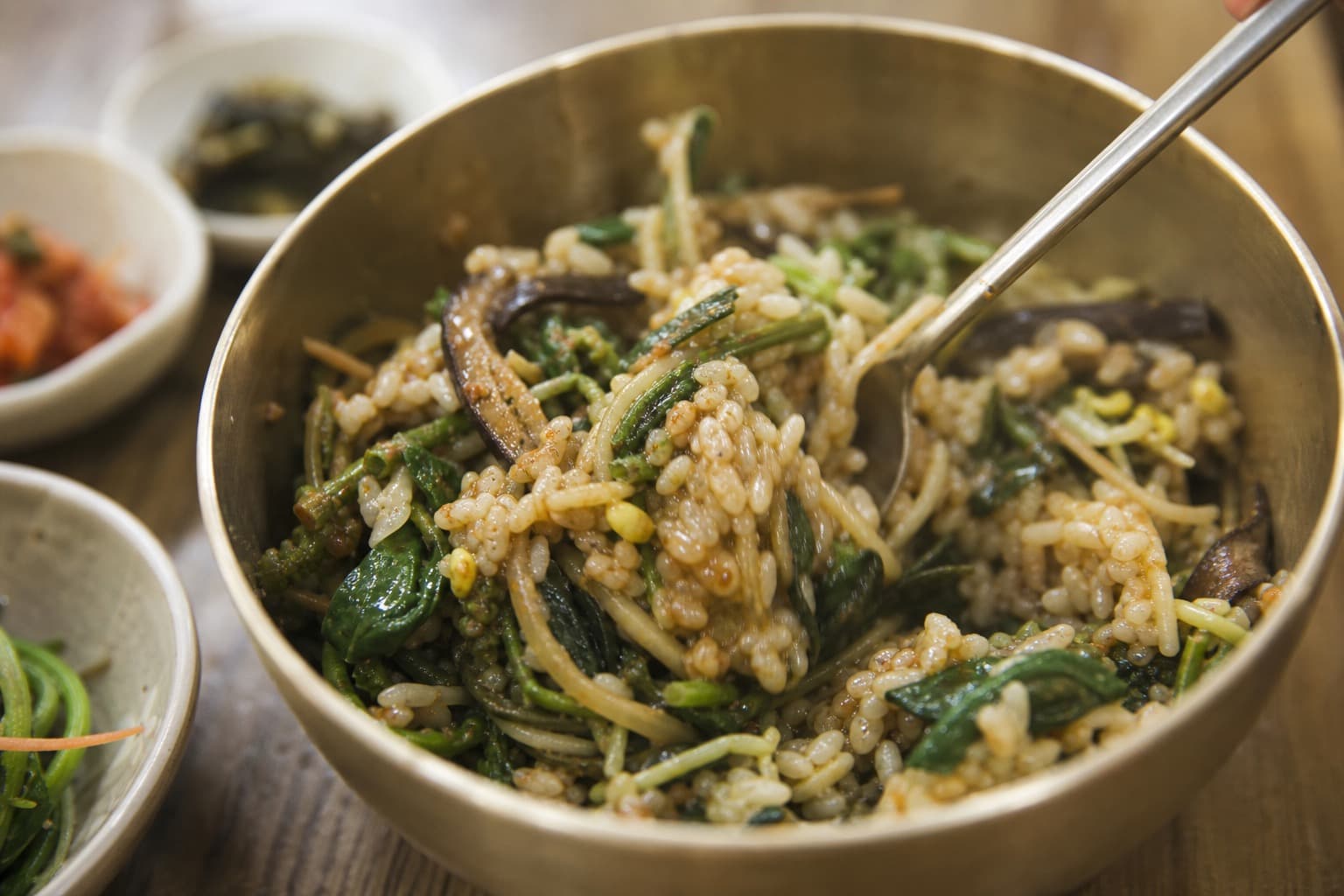
The classic meal of the boribap lane at Jeungsimsa trailhead. Barley rice is mixed hard with mountain greens and doenjang. The most Gwangju way to close a half-day Mudeungsan hike.
“After you sweat on the mountain, doenjang comes before oil.”
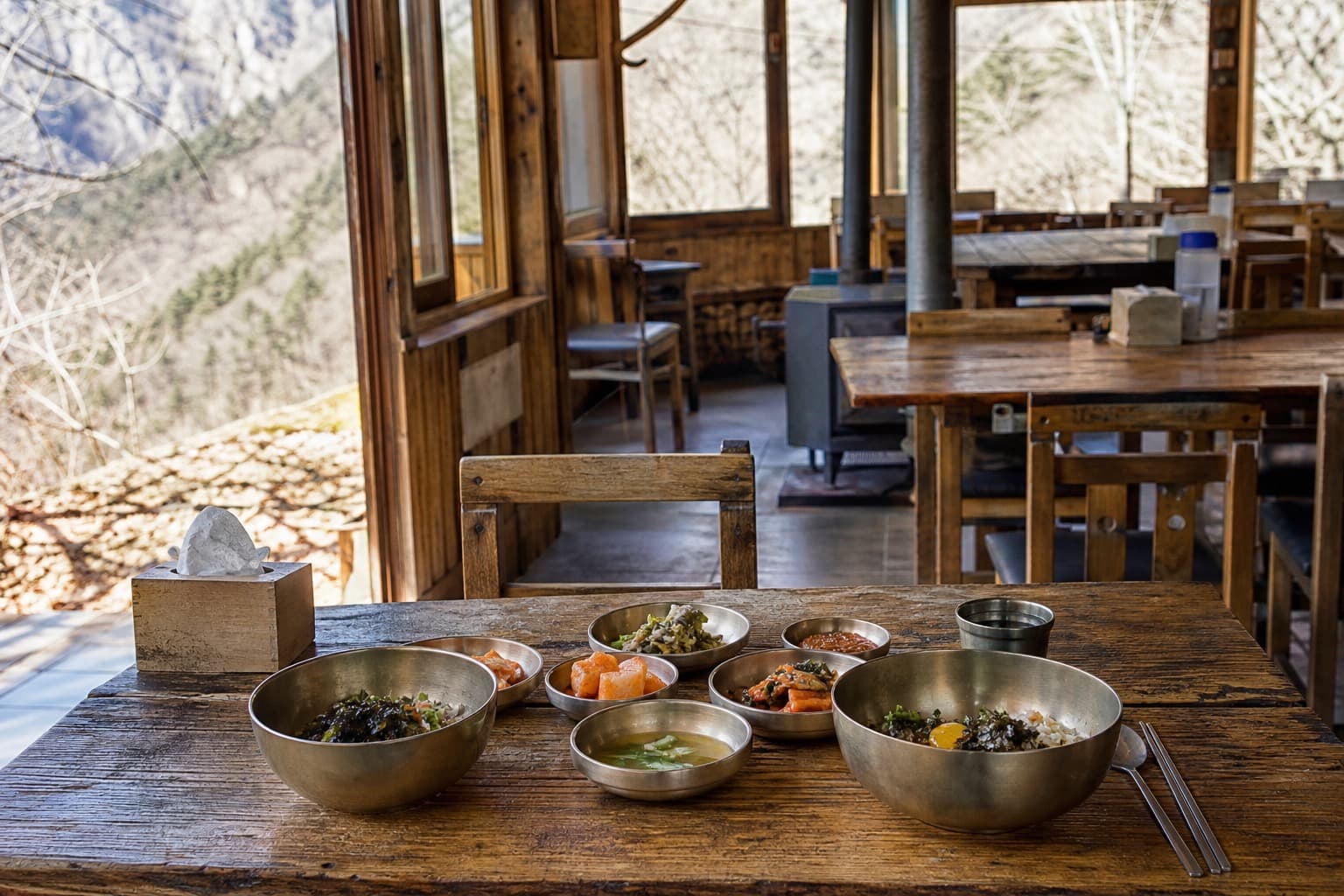
This is a second-generation boribap house at the Jeungsimsa trailhead. The mother soaks barley at 6 a.m. so hikers are fed quickly, while the daughter portions 12 mountain greens into small stainless trays before lunch. The keeper says, “After you sweat on the mountain, doenjang comes before oil,” and loosens a three-year soybean paste just enough that it seasons without turning salty. Fernbrake gets one pass of perilla oil, chwinamul only salt, and a wide mixing bowl plus young-radish kimchi lands first at each table. She often adds, “Barley rice should fill you without making the body heavy.” On one rainy afternoon, a soaked couple came down the mountain, ate three bowls after removing their wet hiking shoes, then returned the next week and quietly left a pair of dry socks as thanks.
Philosophy
What this place protects
A meal that sits light after a hike. Barley is soaked ahead; greens are seasoned separately and meet only in the bowl.
Signature Menu
Order this first
Mountain-vegetable Boribap
산채보리밥SignatureBarley rice, greens, and doenjang mixed in a wide bowl.
₩10,000
Doenjang Jjigae
된장찌개Pro tipA savory stew to spoon alongside the greens.
₩8,000
Acorn Jelly
도토리묵A mountain-side plate for post-hike makgeolli.
₩9,000
Behind the Signature
The signature is not about adding lots of doenjang; it is about using enough to tie the greens together. Doenjang is suggested before gochujang, and the last spoon is loosened with young-radish kimchi broth.
Gallery
Look around
Practical
How to Order
- 1First-timers order the boribap. Add doenjang first, gochujang only if needed.
- 2For a group, share acorn jelly and avoid the post-descent rush.
Near the Jeungsimsa bus terminus. Weekend hikers crowd in around 13:00.
Mixed like bibimbap, but mountain greens lead over meat. You control the spice.
Young greens in spring, young-radish kimchi in summer, more seasoned mushrooms in autumn.