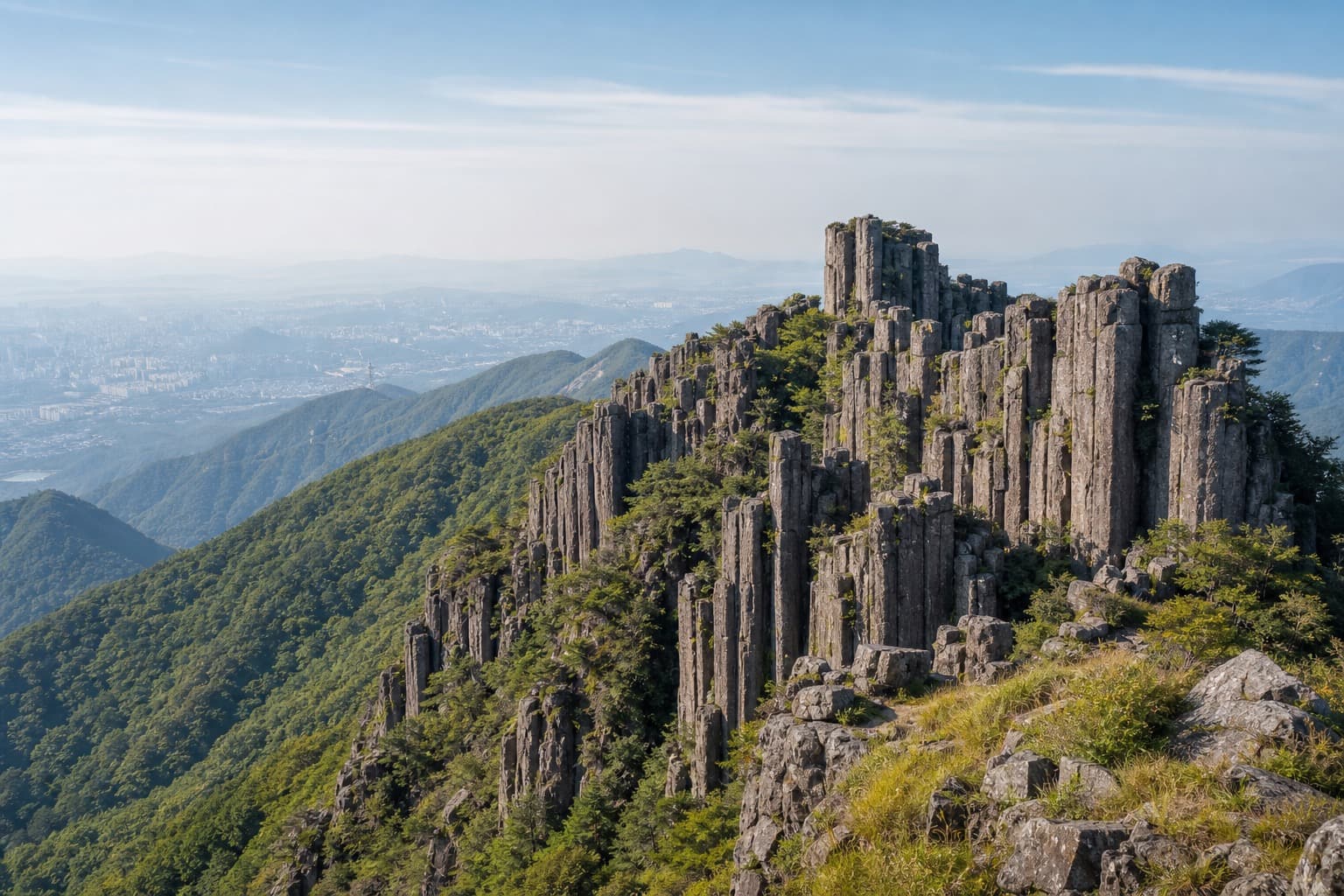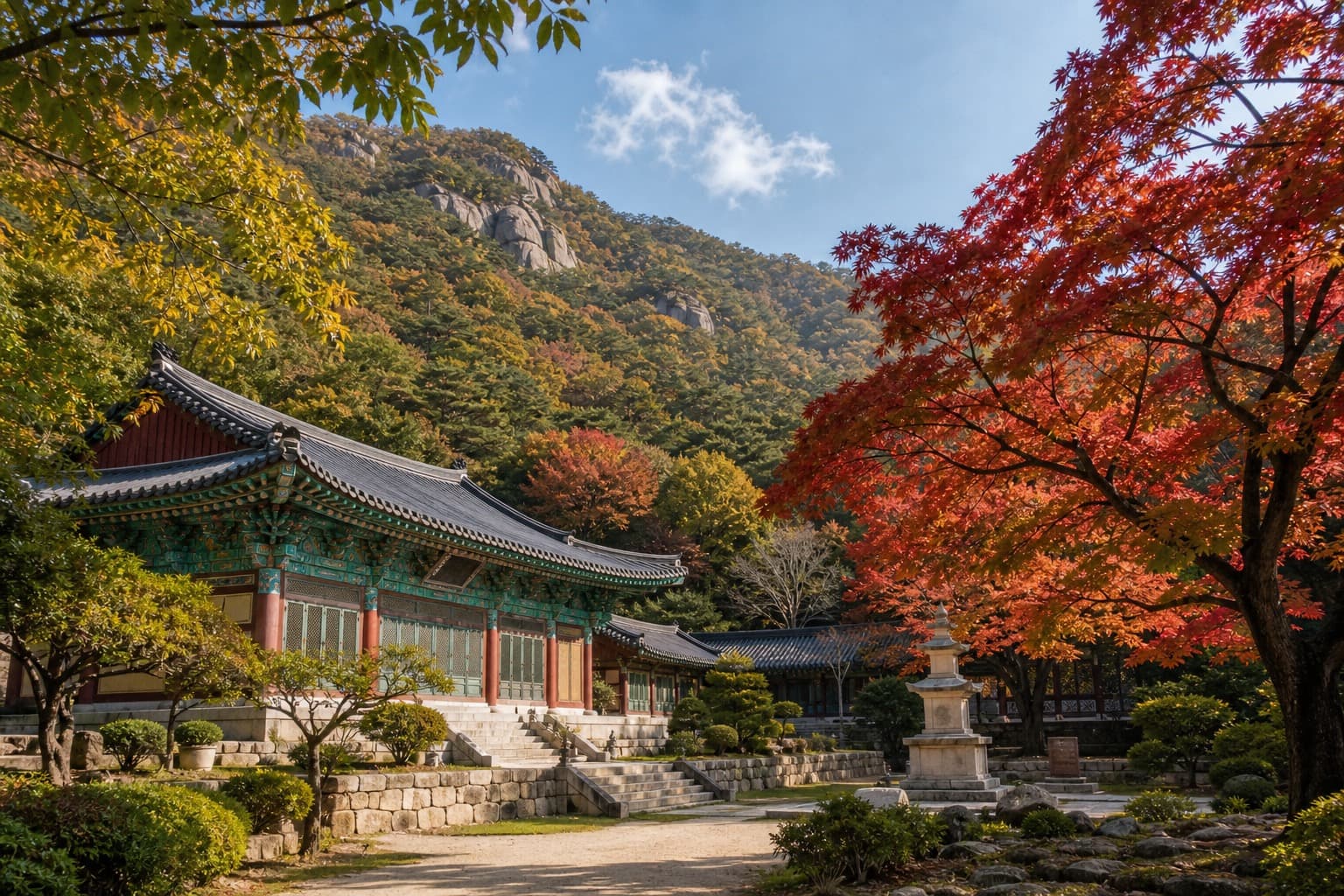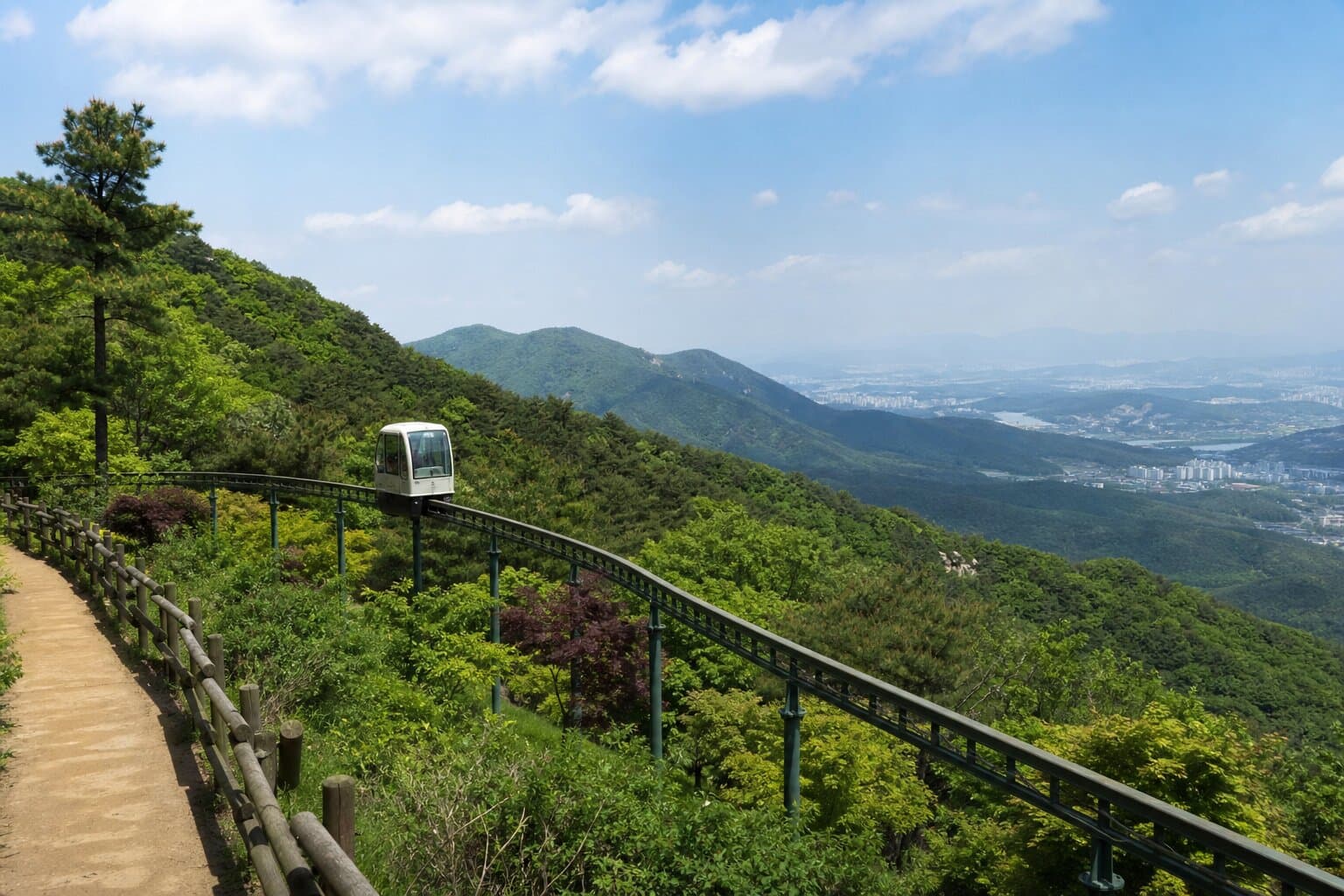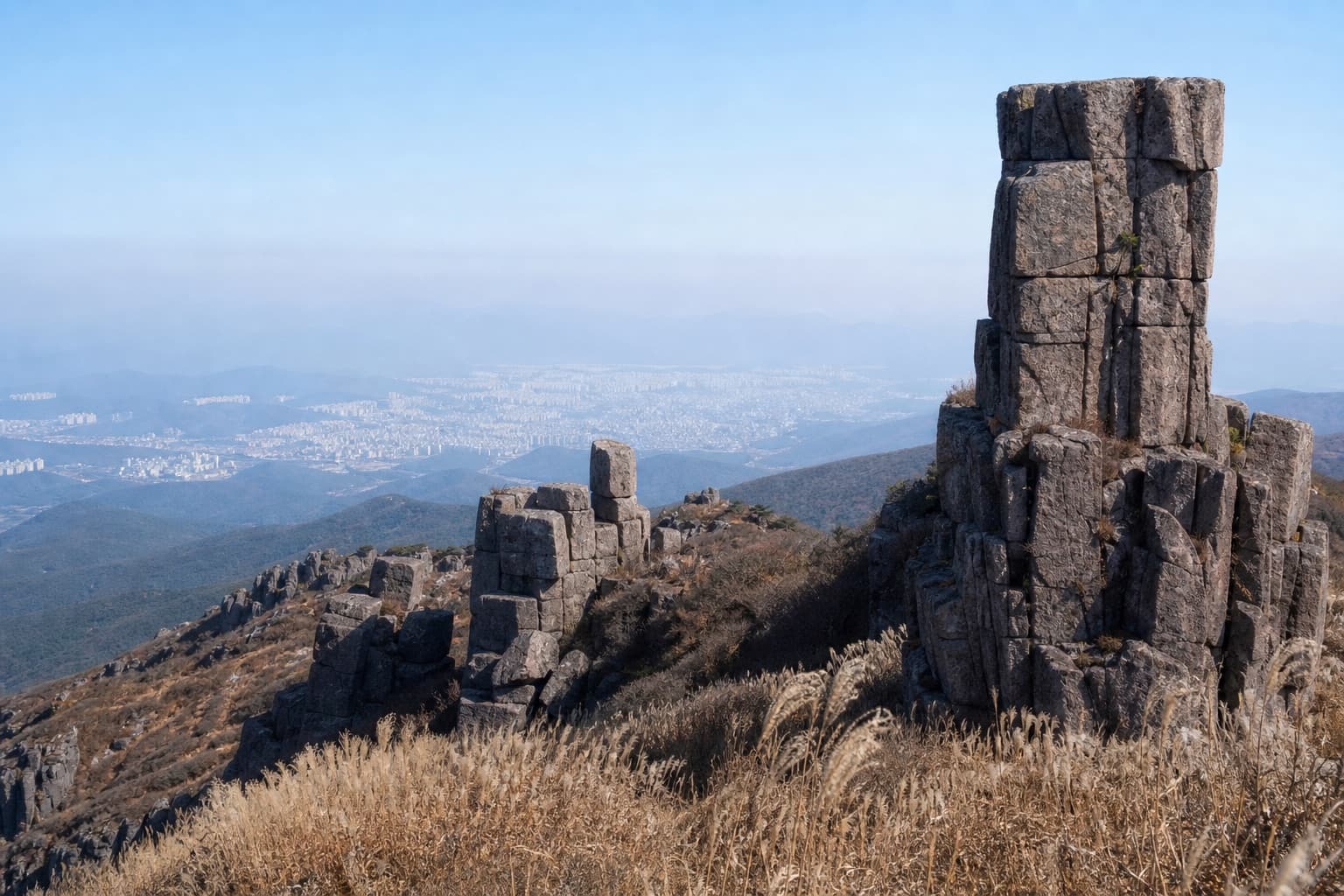
The columnar-joint ridge at Mudeungsan's top — a couple of hours from Jeungsimsa via Jungmeorijae, with all of Gwangju below the pillars.
“Seoseokdae isn't the peak — it's the arrival.”
At Mudeungsan's summit, Seoseokdae is a folding screen of vertical columnar-joint stone pillars. A longtime climber says, “Seoseokdae is remembered less for its height than for the feeling of arriving.” From Jeungsimsa up past Jungmeorijae it's a couple of hours, and at the pillars all of downtown Gwangju spreads below. He suggests “catching the ten minutes when sunset light turns the pillars red.” Winter frost-flowers and autumn silver grass make two different mountains, and the summit trail runs by reservation on some days, so check ahead. He repeats, as a habit, that the ones who don't rush end up seeing the most.
Practical
The Jeungsimsa route is the popular one. Bring water and a windbreaker — the summit is cool even in summer.
Free but a real hike needing time and legs; check the national-park notice for summit reservations.
Autumn silver grass and winter frost-flowers are the highlights; the summit trail runs by reservation some days.