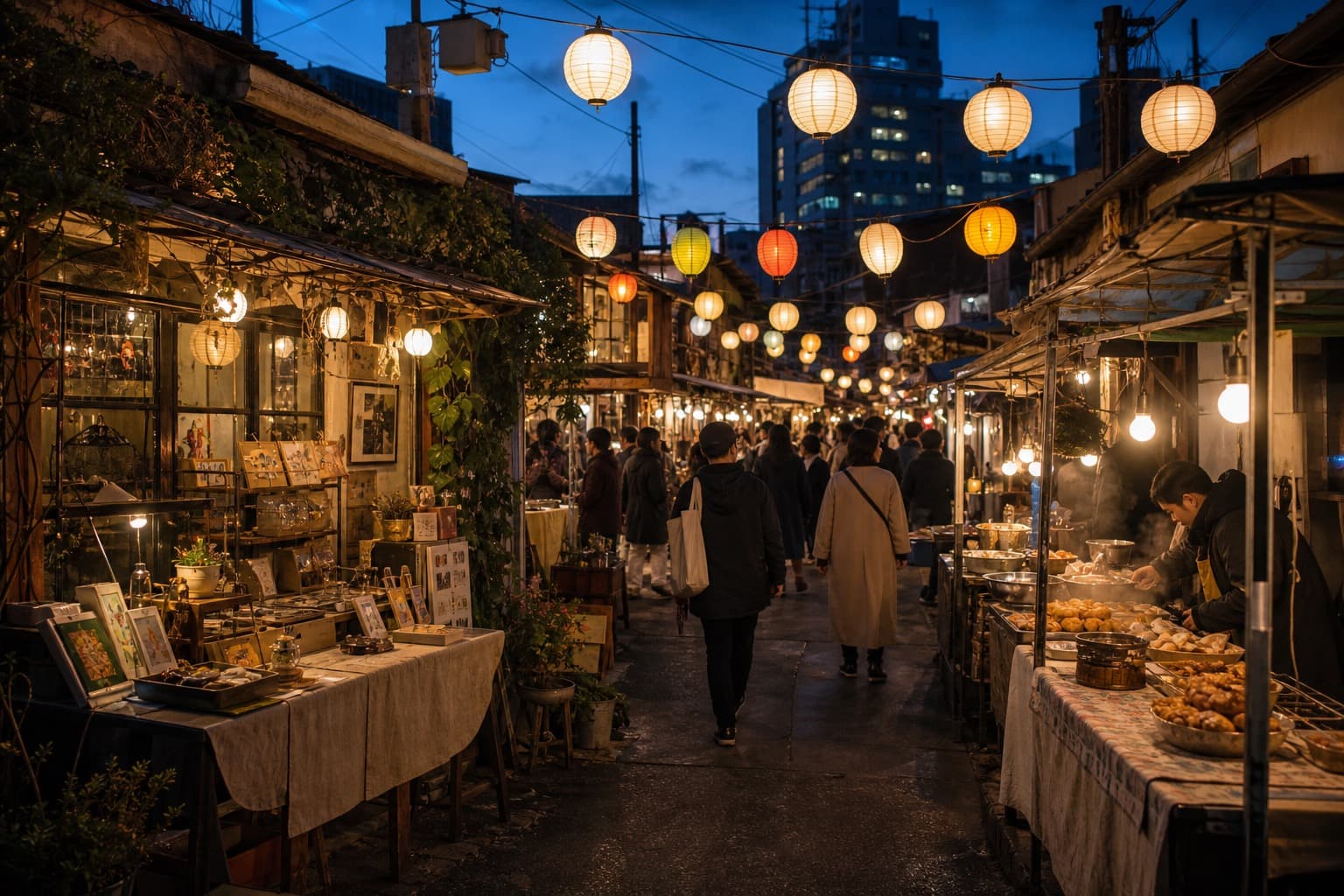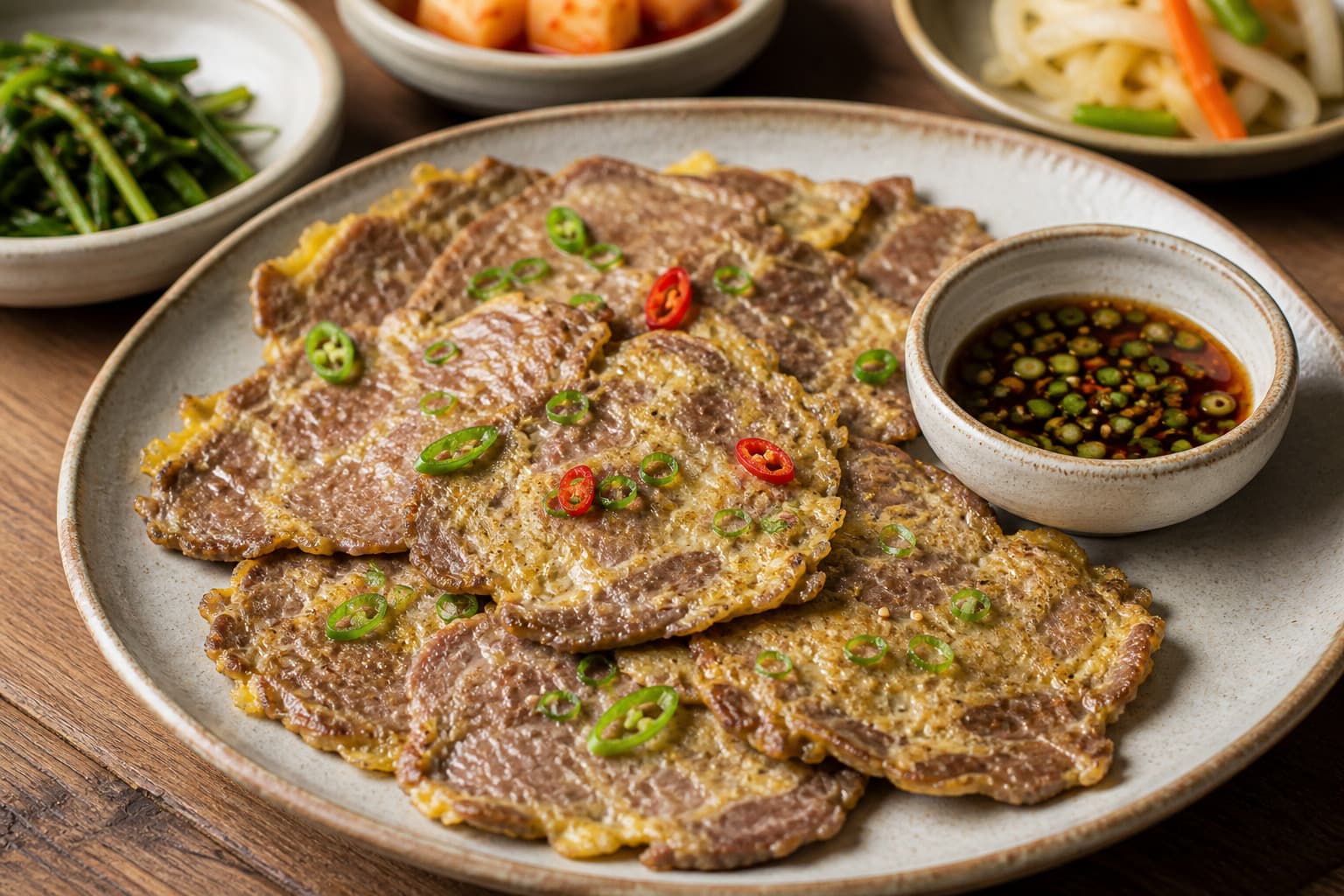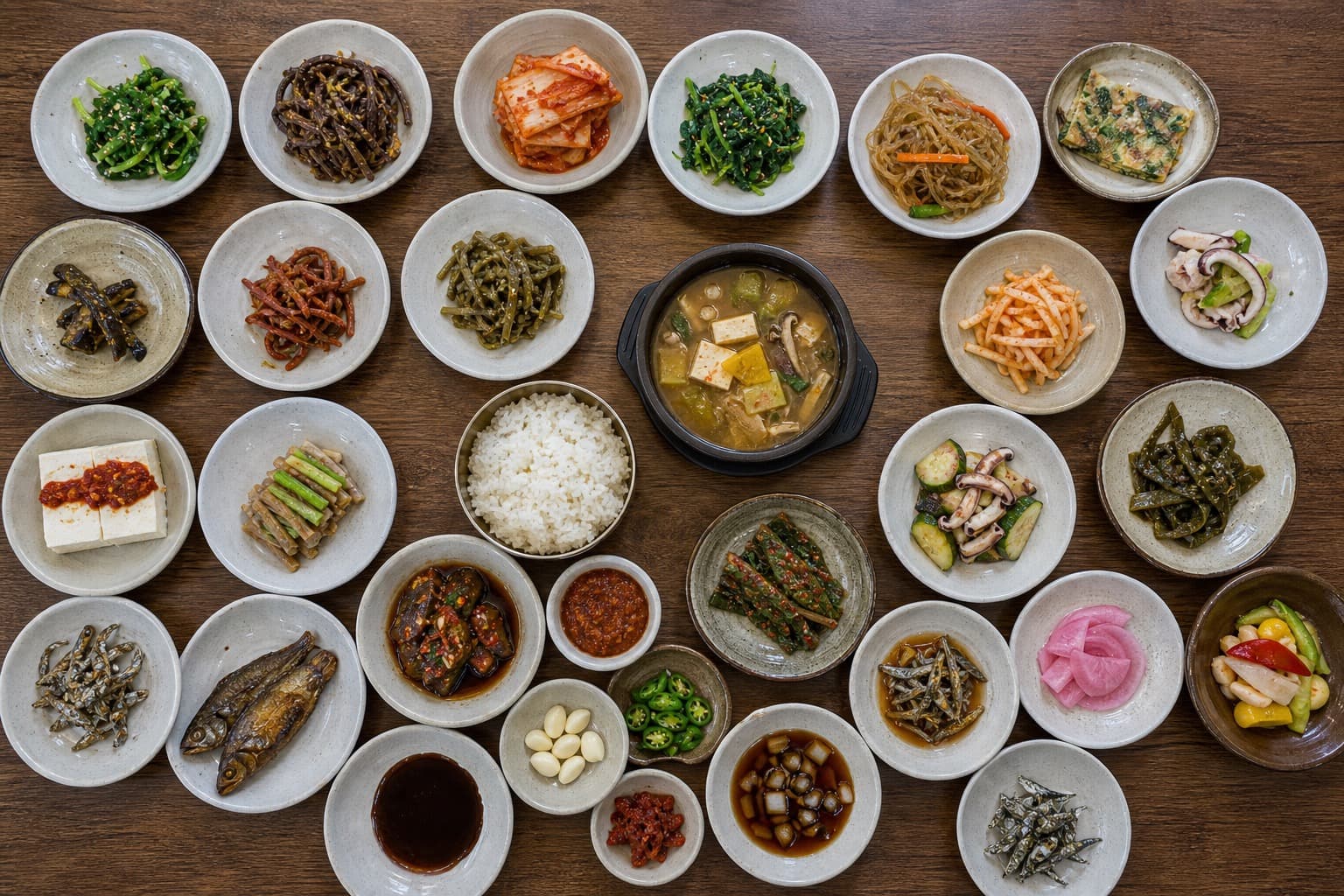
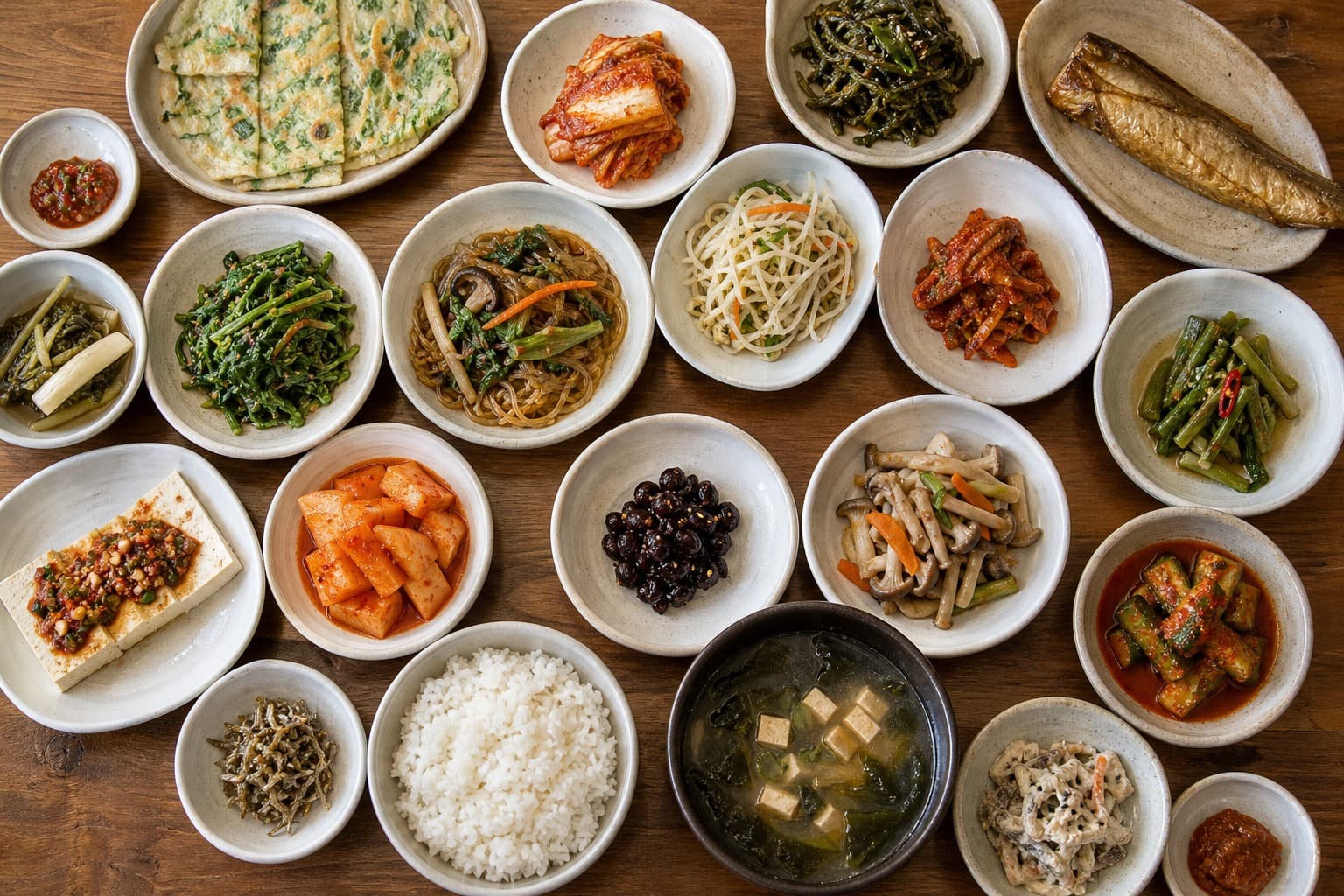
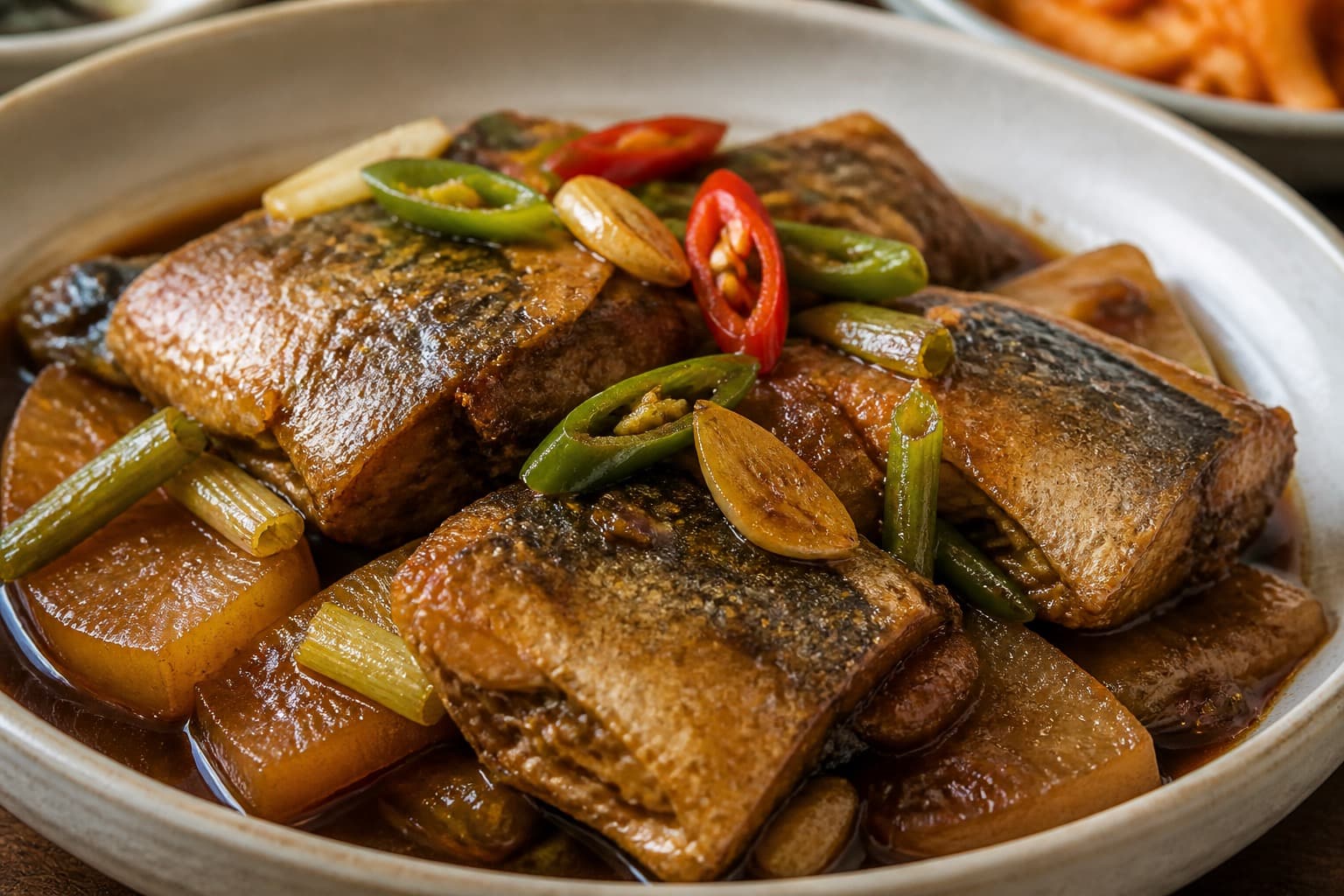
This is home-style baekban in a Daein-dong lane. Braised fish, salted seafood, namul, and jeon fill the table in small plates, with lunch turning fast.
“Baekban is what you might eat at home today, only handled with a little more care.”
Two sisters run an 18-seat baekban house in a lane beside Daein Market. The older sister watches the braised-fish pot each morning; the younger arranges namul and salted-seafood plates. As they say, “Baekban is what you might eat at home today, only handled with a little more care,” the day's market basket matters more than a fixed menu. A lunch table usually carries around 20 small dishes; stir-fried anchovies are remade every other day, and steamed egg is cooked just before serving. They add, “An empty plate means you can eat one more bowl of rice,” urging guests not to be shy about refills. Once, a solo traveler asked every banchan name, so the sisters wrote 17 names on paper; that temporary English note later stayed on the wall.
Philosophy
What this place protects
Today's market basket over sheer count. Even a small empty plate is refilled to keep the generosity of home food.
Signature Menu
Order this first
Namdo Baekban
남도백반SignatureA home-style lunch with around twenty banchan.
₩12,000
Extra Braised Fish
생선조림 추가Pro tipA deeper braise to share with a group.
₩8,000
Steamed Egg
계란찜A warm side steamed after ordering.
₩4,000
Behind the Signature
The signature is not one dish but the whole table. Salty jeotgal, mild namul, and warm jeon find balance only when alternated over rice.
Gallery
Look around
Practical
How to Order
- 1Order baekban by headcount and today's banchan table arrives.
- 2Taste unfamiliar sides slowly; eat salted seafood with rice.
Pairs well with Daein Art Market. Popular sides may run out after lunch peak.
Banchan refills are possible, but ask only for what you will finish. Jeotgal can be salty.
Spring brings greens, summer young radish and cucumber, autumn more gizzard shad and mushroom sides.