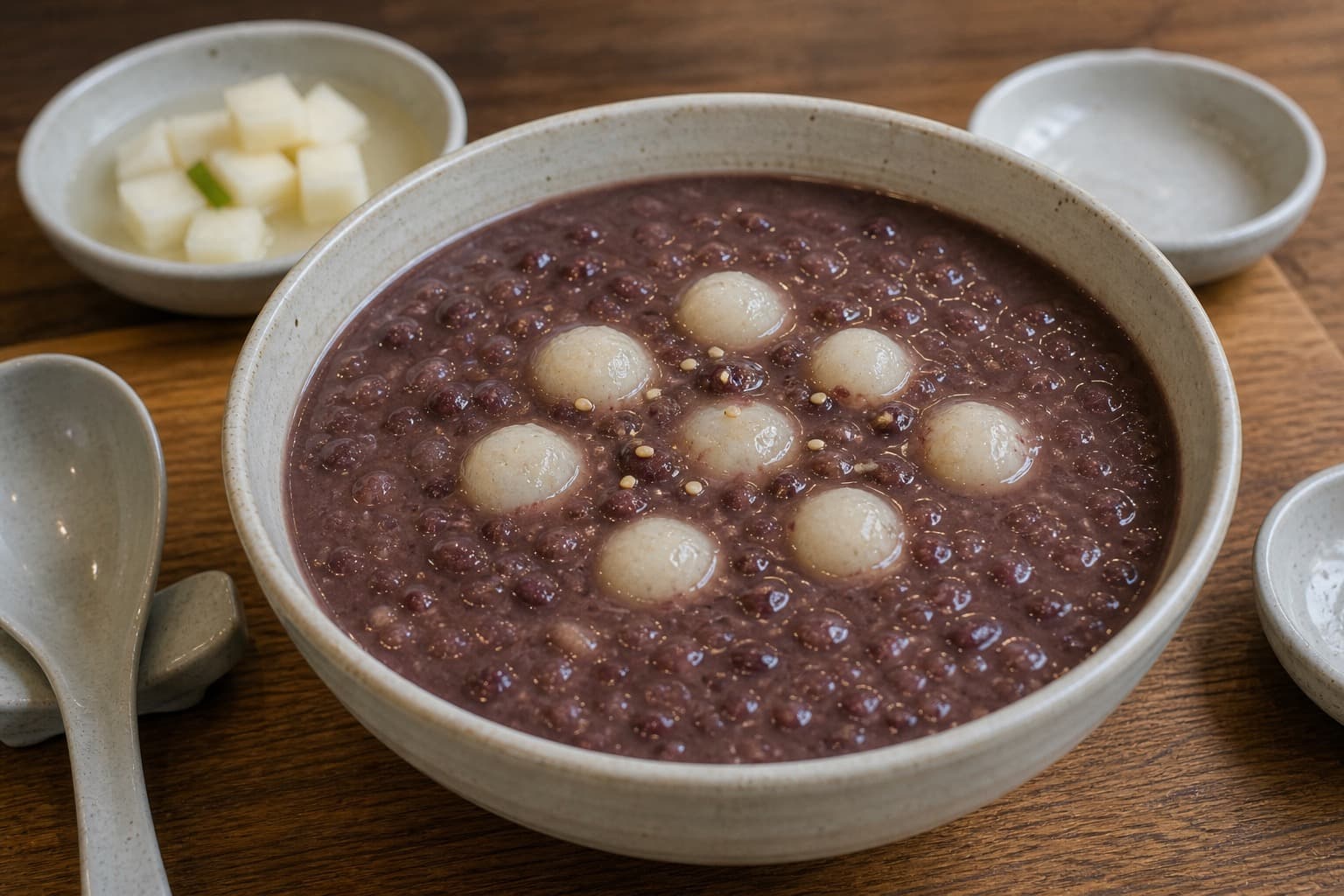
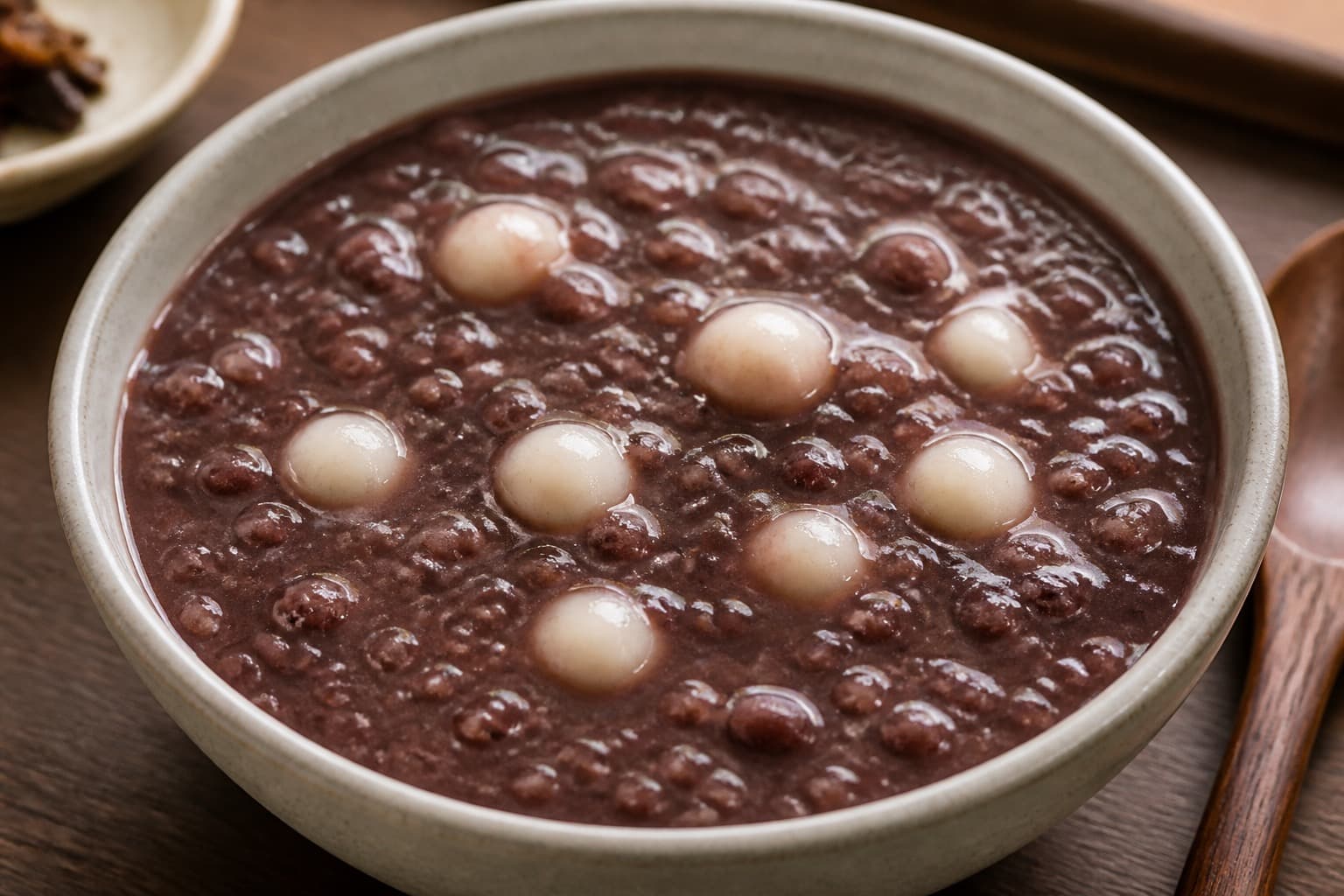
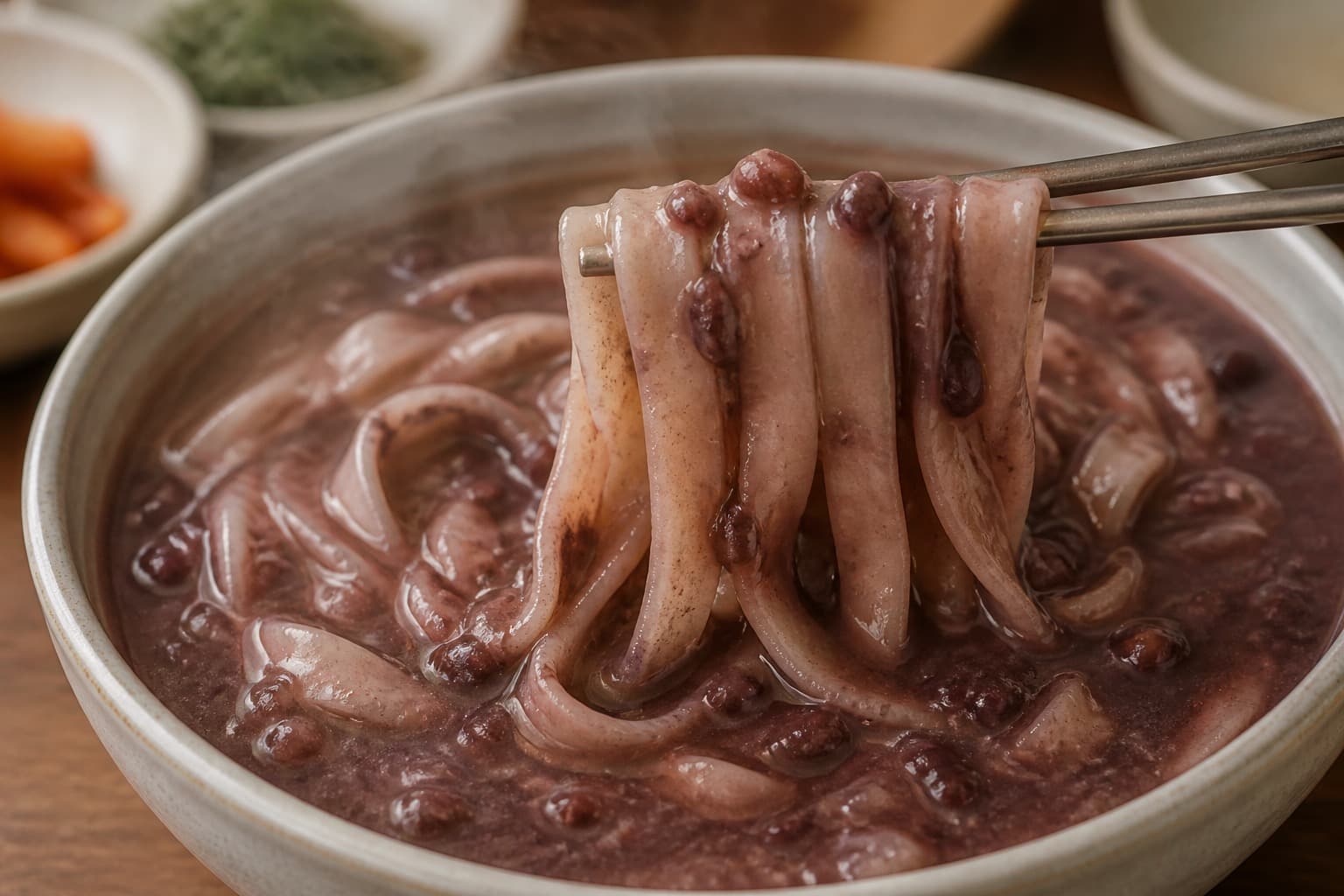
This is a Nam-Gwangju Market red-bean porridge counter. Beans are boiled and milled in-house, rice balls float on top, and red-bean kalguksu makes a full lunch.
“Patjuk is not sweet porridge first — it is porridge that warms the stomach.”
This is a keeper who has guarded a red-bean cauldron in Nam-Gwangju Market for 25 years. He sorts beans the previous night, soaks them, and starts the first pot at 7 a.m. before straining the skins. “Patjuk is not sweet porridge first — it is porridge that warms the stomach,” he says, leaving sugar on the table while the kitchen seasons only with salt. Rice balls are made from hot-water kneaded glutinous rice flour and rolled by palm; about 700 are made on an average day. Noodles for red-bean kalguksu are cut finger-wide so they do not dissolve. He jokes, “On winter solstice, the pot gets tired before the line does.” After seeing a grandmother count rice balls for her granddaughter, he began adding one extra to children's bowls.
Philosophy
What this place protects
Sweetness belongs to the diner; the kitchen guards the bean flavor and salt. Rice balls are hand-rolled daily.
Signature Menu
Order this first
Red-bean Porridge with Rice Balls
새알팥죽SignatureClassic patjuk with hand-rolled rice balls.
₩8,000
Red-bean Kalguksu
팥칼국수Pro tipA filling bowl with finger-wide noodles.
₩8,000
Extra Rice Balls
찹쌀새알 추가For extra chewy rice balls.
₩1,000
Behind the Signature
Solstice patjuk began as a seasonal dish to ward off misfortune, but in the market it became winter lunch. Diners joke about eating as many rice balls as their age.
Gallery
Look around
Practical
How to Order
- 1First time: rice-ball patjuk. Taste before adding sugar.
- 2For a full lunch, red-bean kalguksu is heartier.
Around winter solstice, takeout waits get long. Weekday mornings are calmest.
Korean patjuk is not automatically sweet. Adjust with sugar or salt yourself.
Peaks around winter solstice. Even in summer, the house keeps the red-bean bowls warm.