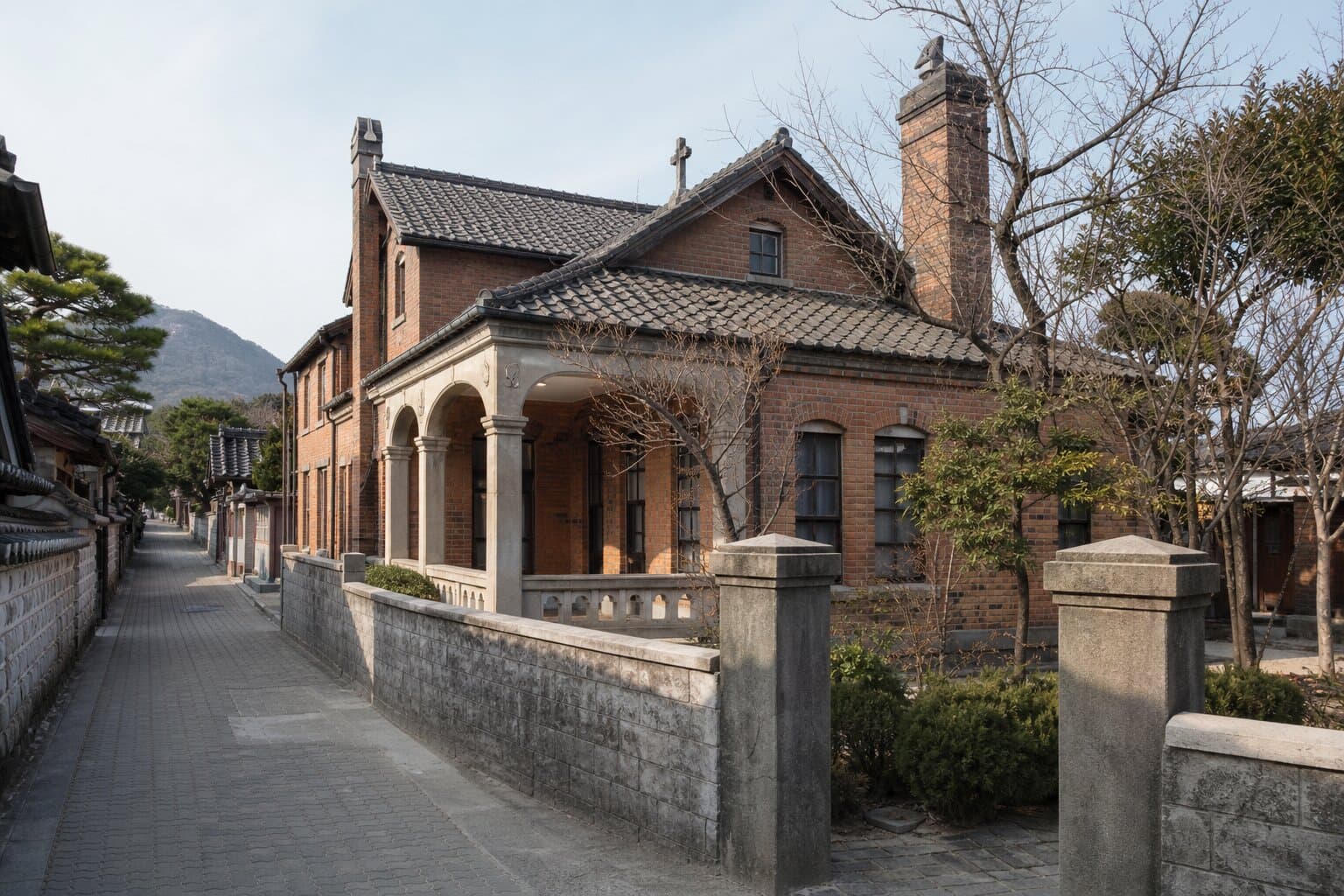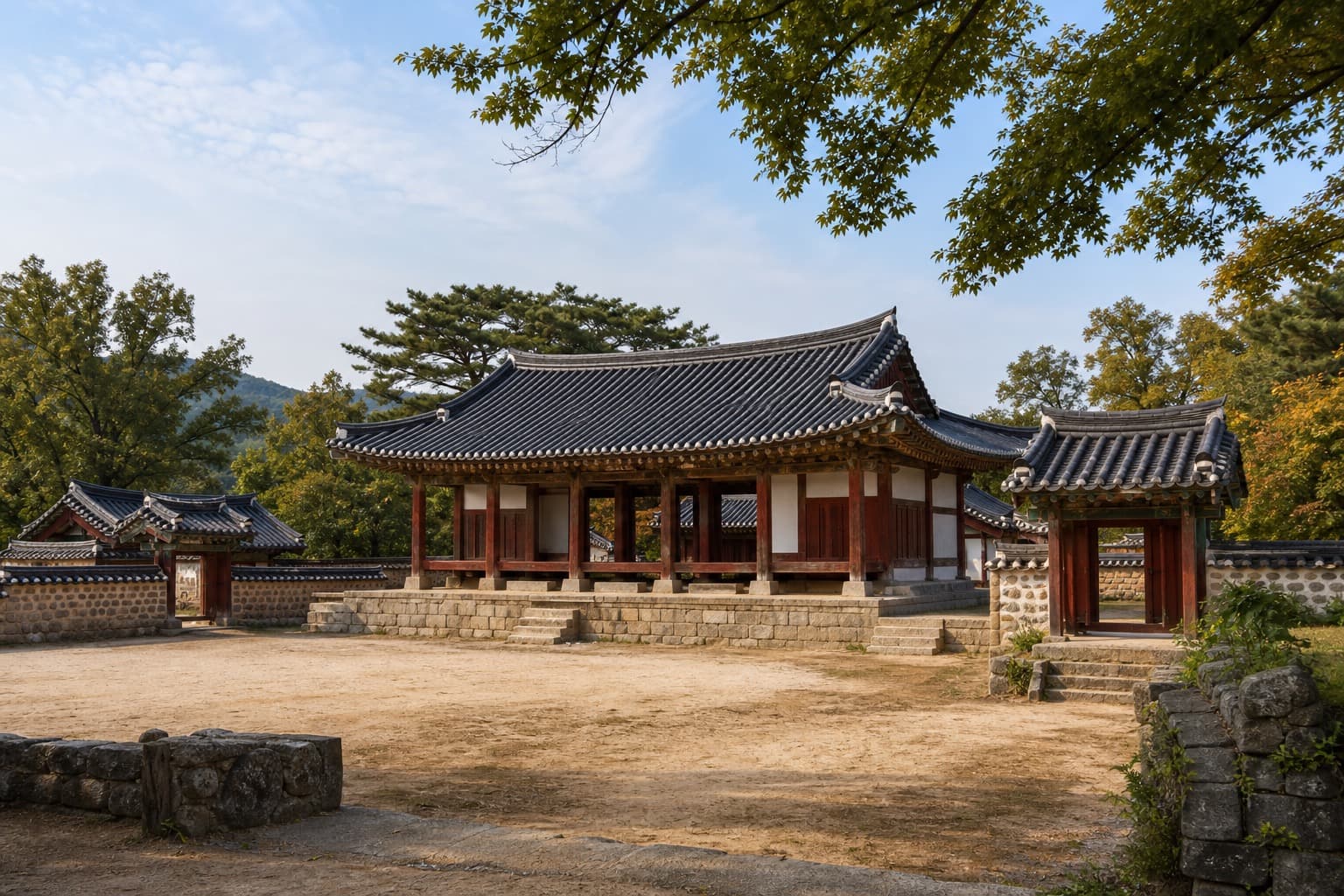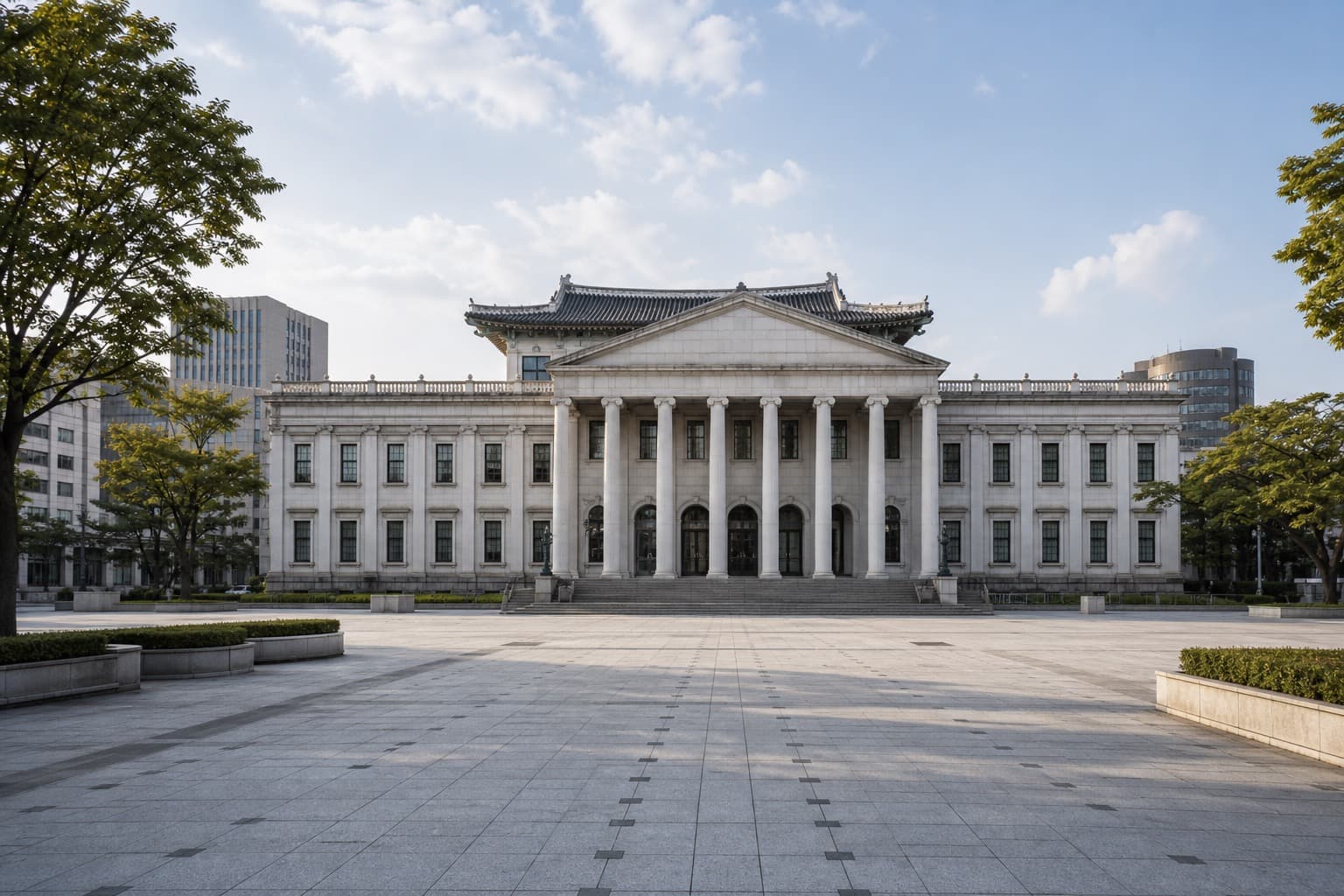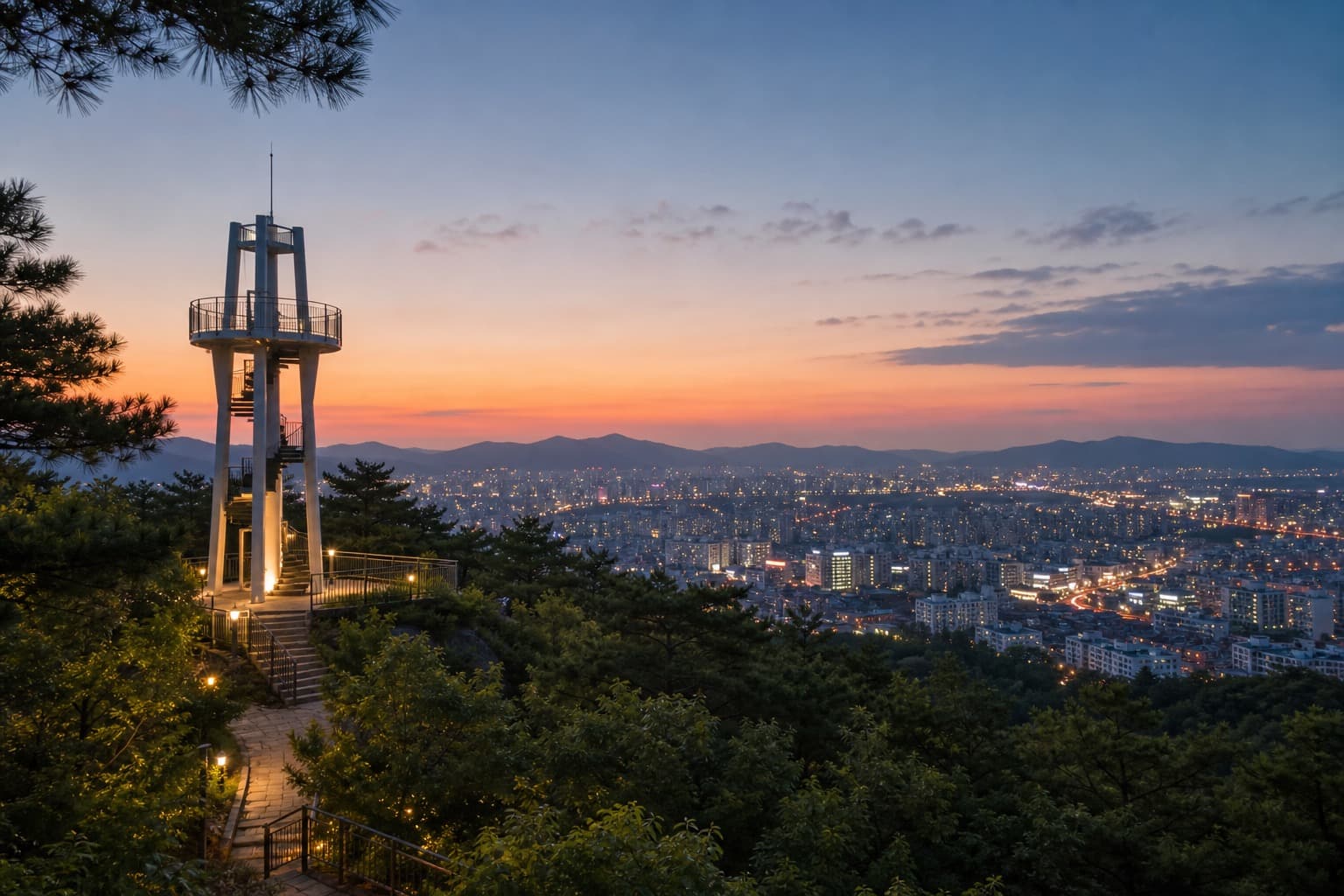
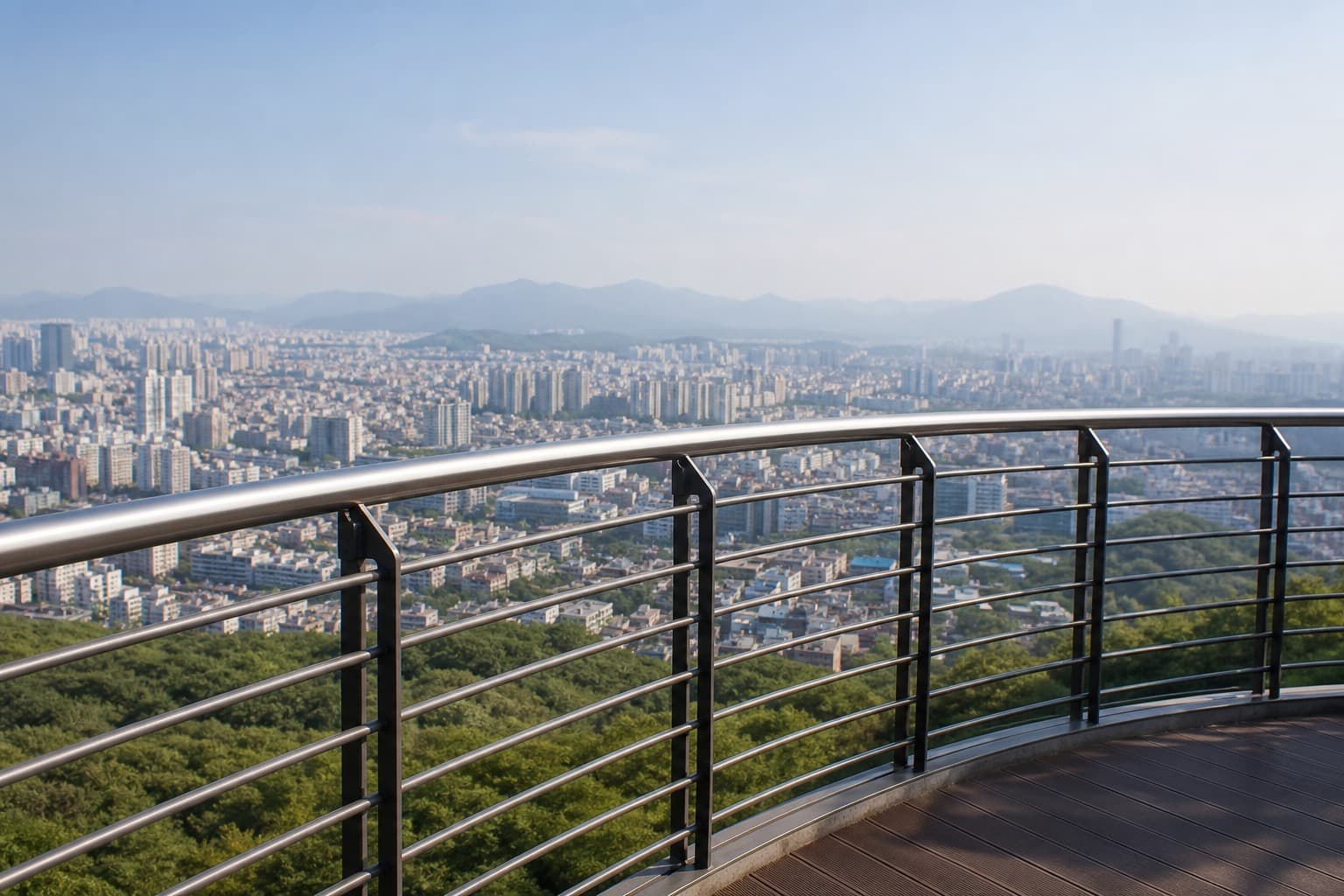
A city-view point on the hill of Sajik Park. By day, the Mudeungsan ridgeline; by evening, the lights of Geumnam-ro and Chungjang-ro below.
“From above, Gwangju shows the mountain first, then the roads.”
A park interpreter has long cared for Sajik Park's walking paths. After retirement, he picked up litter three times a week, then volunteered as a guide; now he begins every observatory visit by pointing toward Mudeungsan. “From above, Gwangju shows the mountain first, then the roads,” he says, suggesting the Seoseokdae ridgeline on clear days and the straight Geumnam-ro axis on cloudy ones. He likes the moment around 6 p.m. when city lights turn on and carries one old pair of binoculars in his bag. He adds, “A night view is remembered by wind more than by photos.” One spring, after the cherry blossoms fell, a couple preparing a proposal lost a ring; the interpreter and three walkers found it in 20 minutes, and the story stuck to the tower.
Philosophy
What this place protects
A view is about direction more than height. Read Mudeungsan, Geumnam-ro, and Yangnim-dong in order to understand the city shape.
Behind the Signature
Sajik's signature is not only the night view. The Gwangju moment is the sequence: ridge darkening first, city lights following below.
Gallery
Look around
Practical
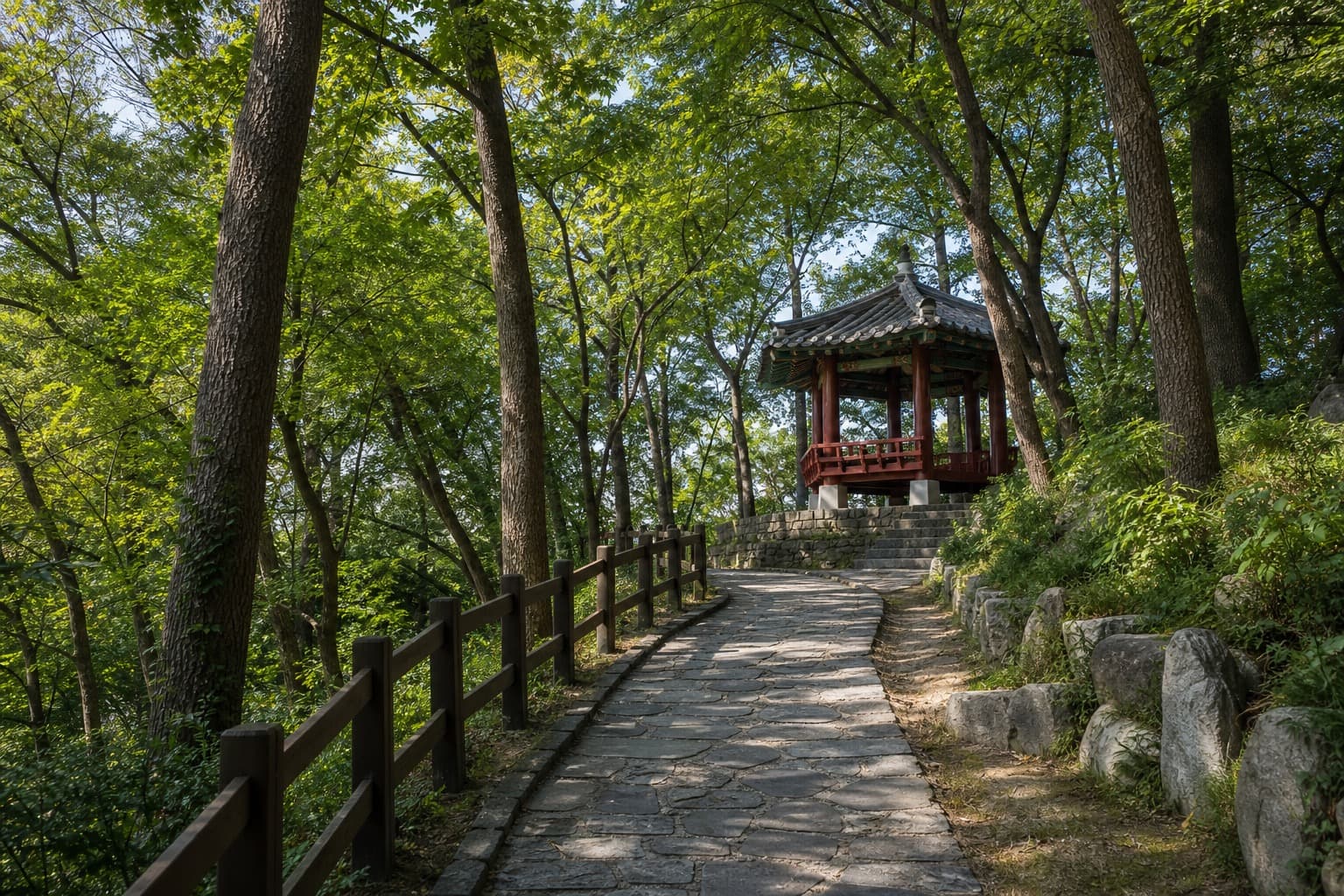
Walk it with Yangnim-dong and Gwangju Park. At night, descend by lit paths.
A free viewpoint. There are stairs and slopes, so wear comfortable shoes.
Spring blossoms, summer evening breeze, autumn sunsets, and winter clarity each change the view.