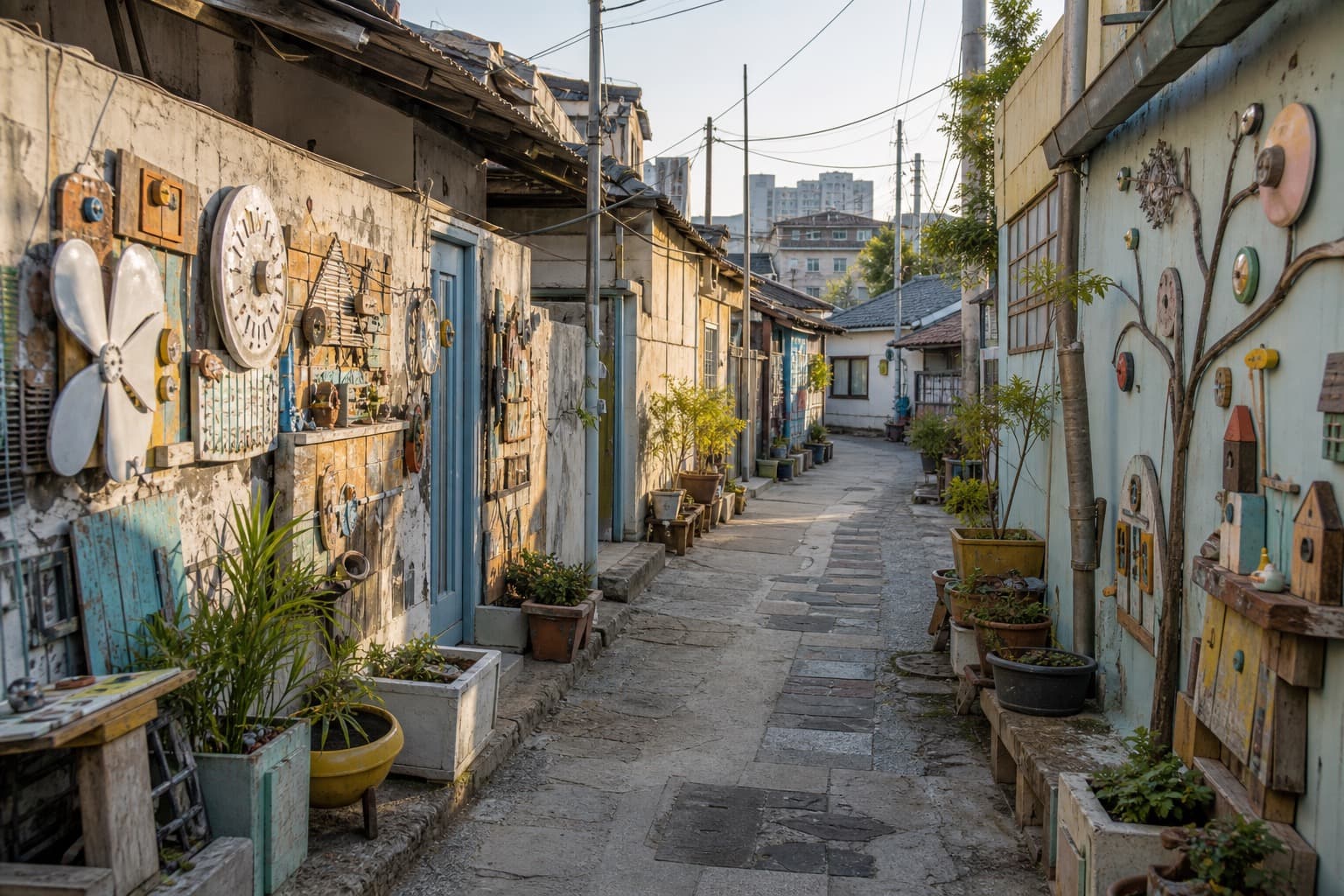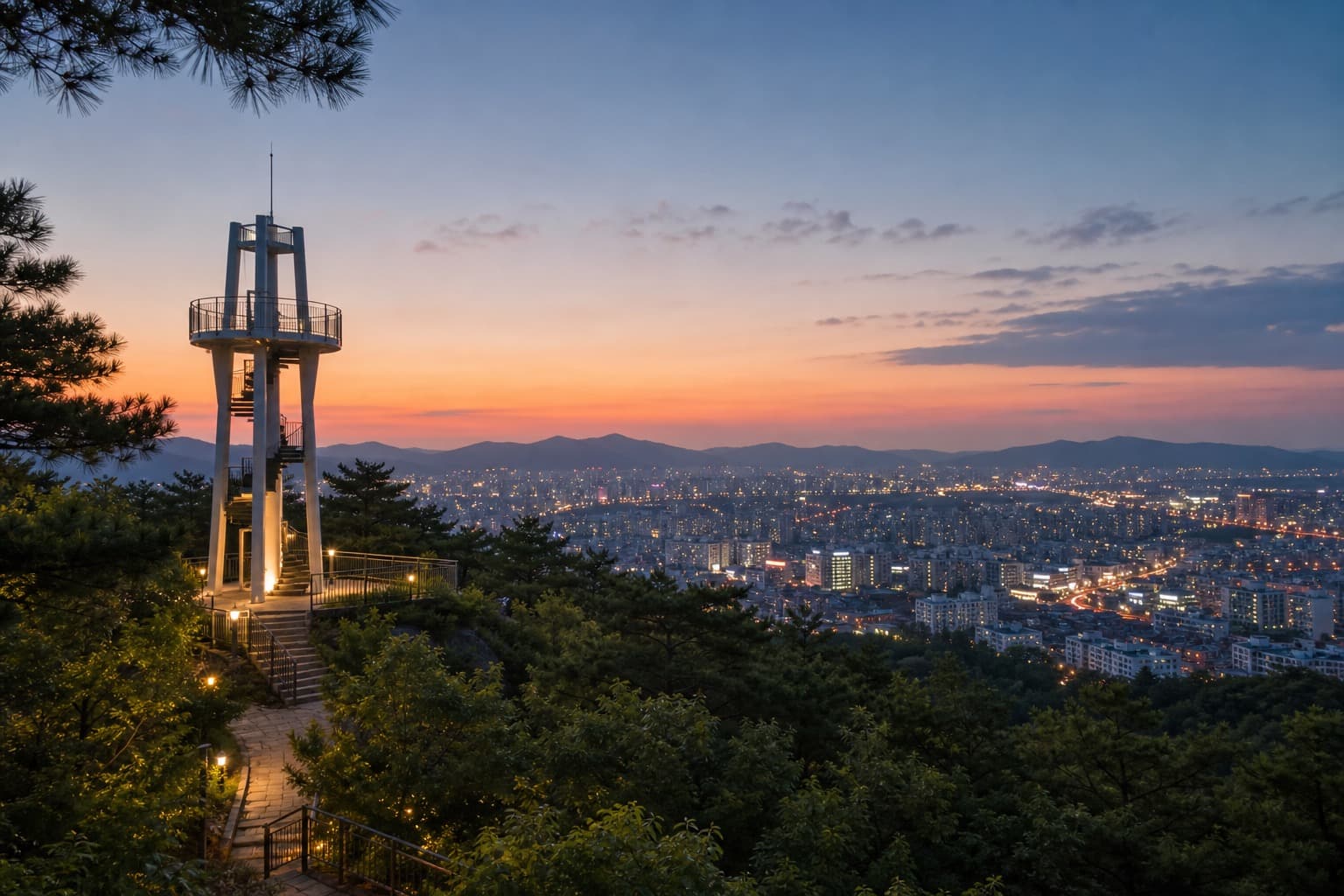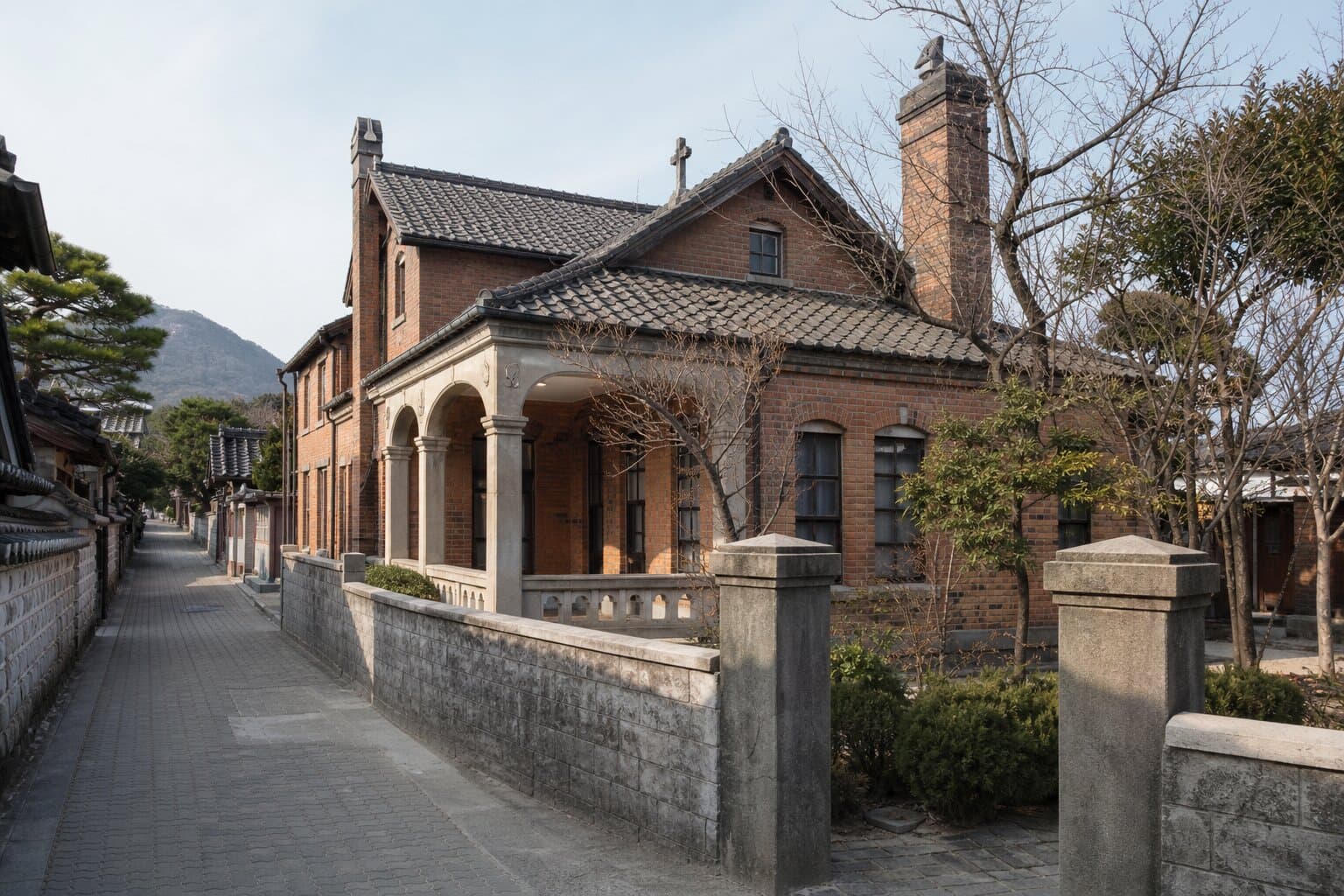
A walking route linking Yangnim-dong missionary houses, Owen Memorial Hall, Lee Jang-woo House, and modern lanes. This is the history-deeper side of Yangnim beyond Penguin Village.
“In Yangnim-dong, look at the direction of the houses before the murals.”
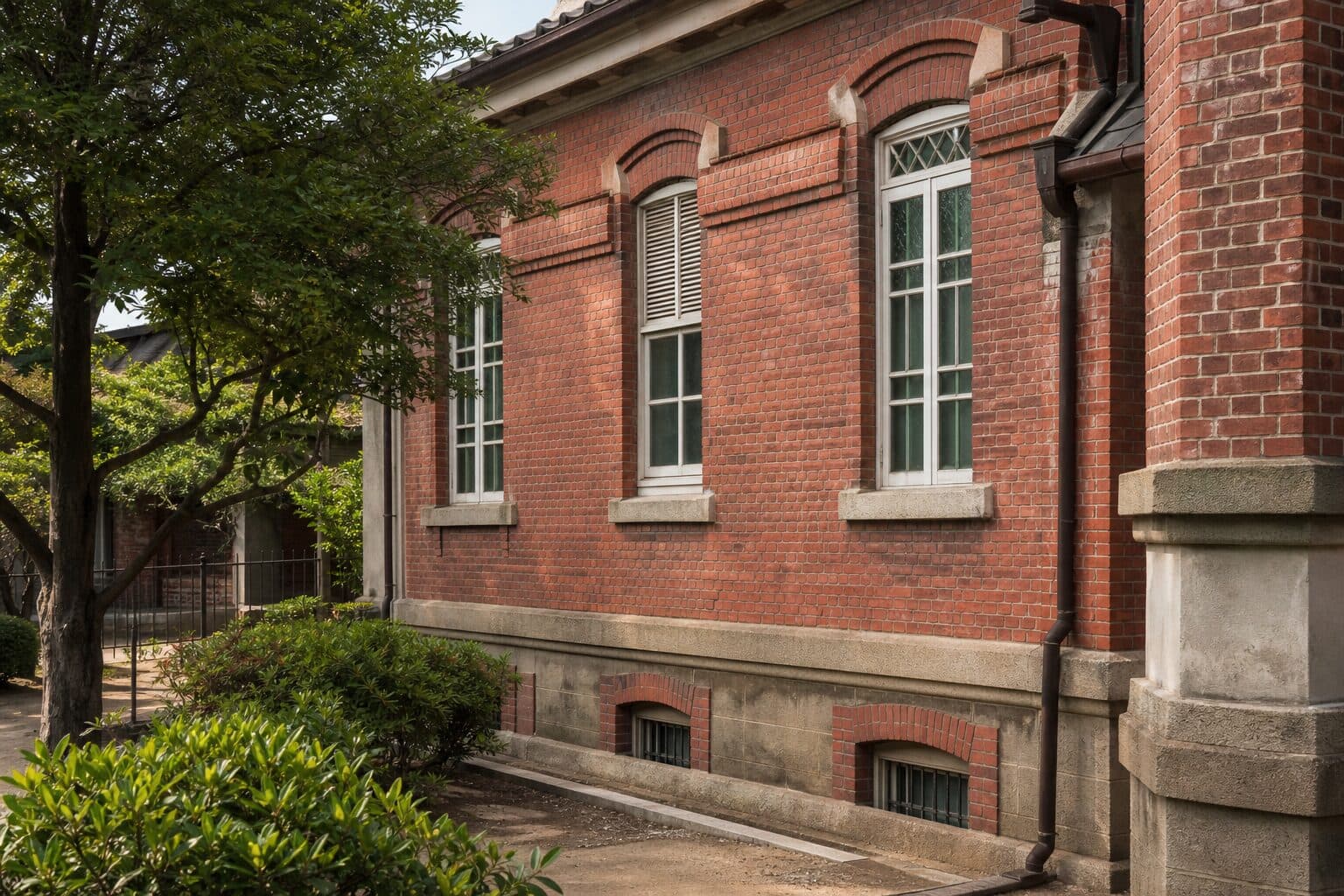
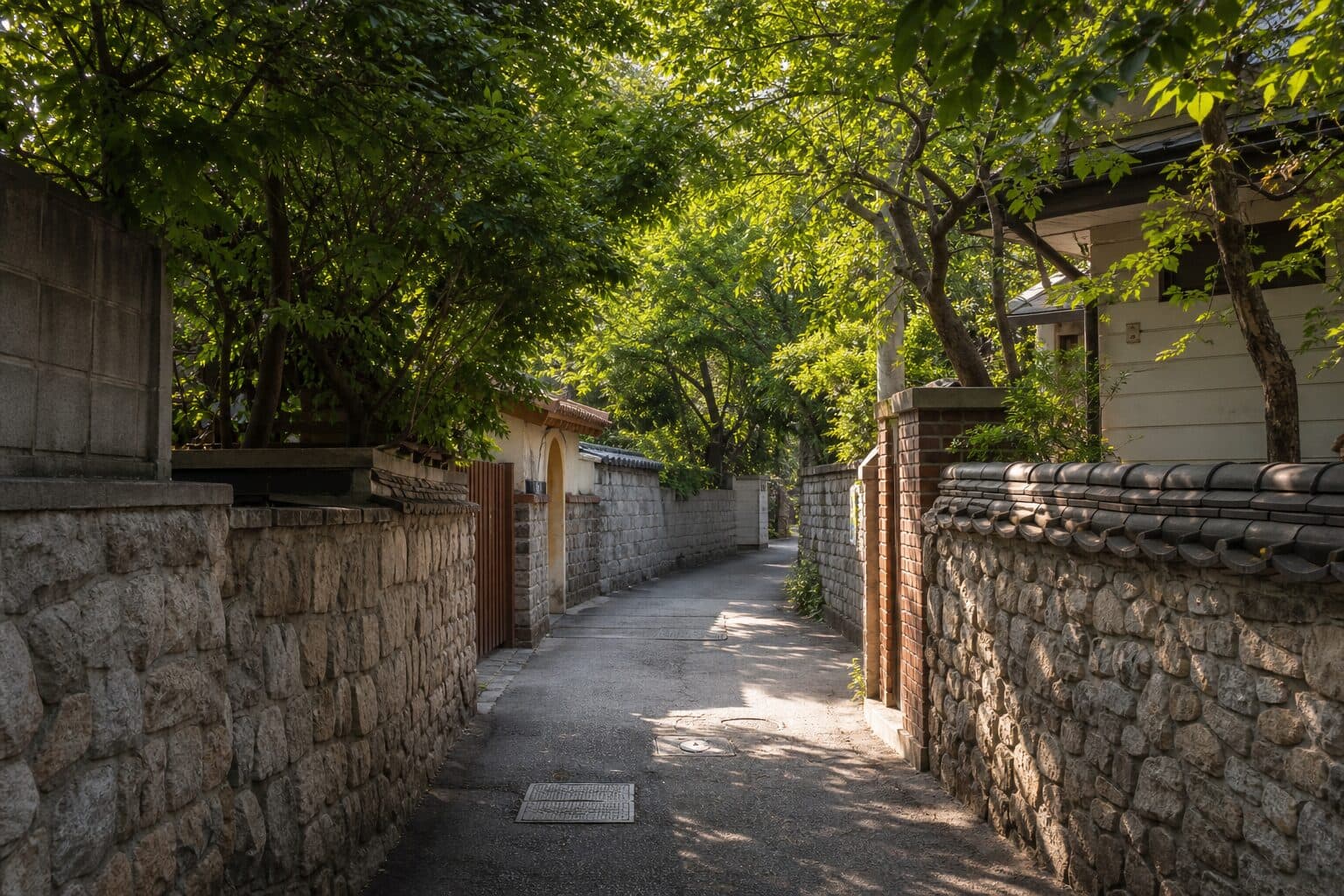
A neighborhood researcher interprets Yangnim-dong's modern history. His grandmother lived near these lanes, so as a child he passed red-brick houses like playground scenery; as an adult he began collecting missionary records and house drawings. “In Yangnim-dong, look at the direction of the houses before the murals,” he says, asking visitors to read missionary-house windows, hanok gates, and the courtyard of Lee Jang-woo House in order. His notebook lists construction years and repair histories for 27 buildings, and he explains that rooflines are clearer on rainy days. He adds, “One threshold can speak an era better than one photo.” Once, a visitor planned to leave after Penguin Village; he persuaded her to walk 15 more minutes, and she returned the next month with her parents.
Philosophy
What this place protects
Yangnim's modernity remains in house placement, windows, and thresholds more than murals. Walk quietly and respect residents first.
Behind the Signature
The signature route runs from missionary houses to Lee Jang-woo House. The close contrast between Western brick houses and hanok courtyards is Yangnim's core.
Gallery
Look around
Practical
Walk it with Penguin Village, Sajik Park, and Gwangju Hyanggyo. Keep quiet in residential lanes.
A free lane walk. Interior access to some houses varies by time and day.
Spring flowers and autumn light suit photos; rainy days sharpen brick and rooflines.