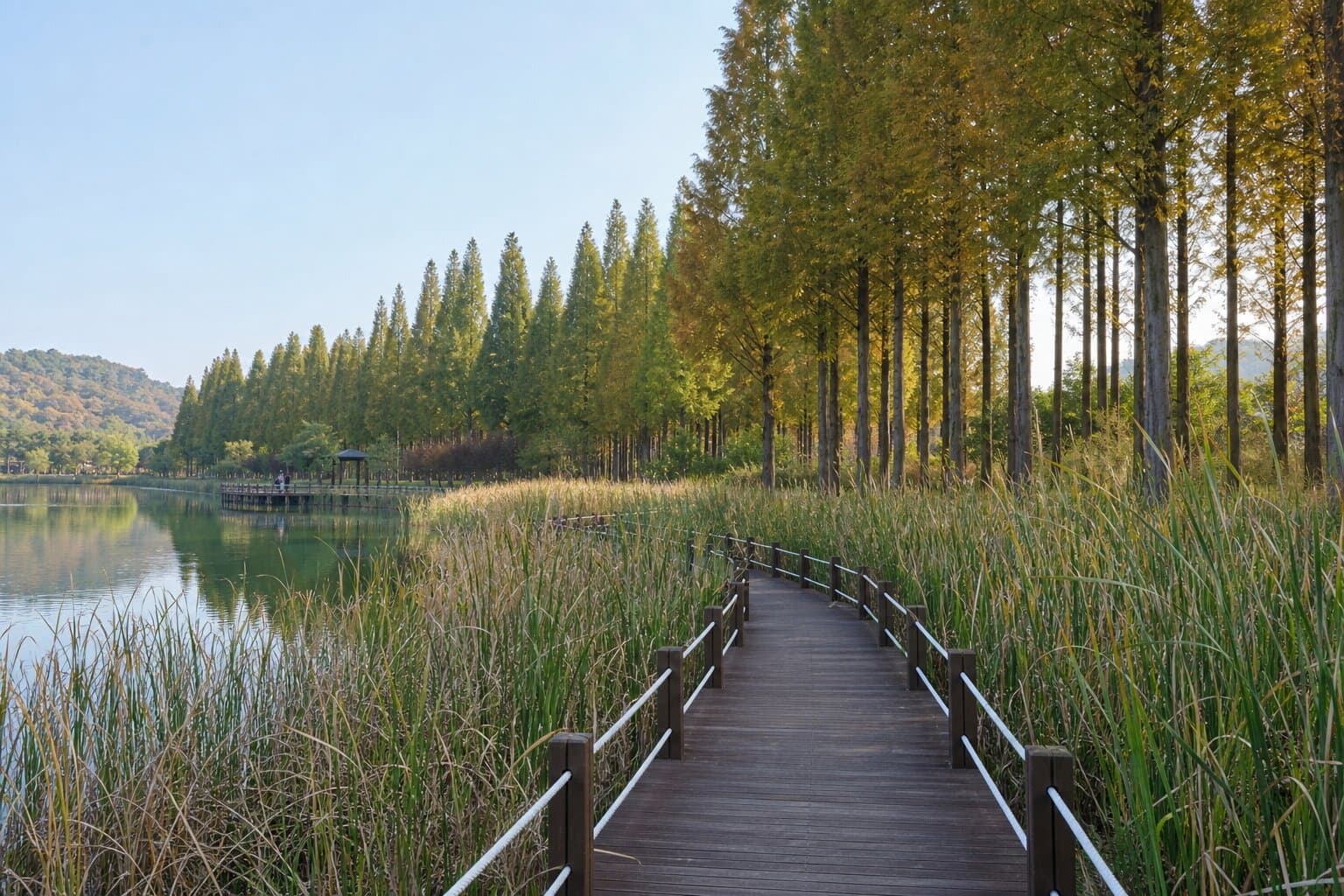
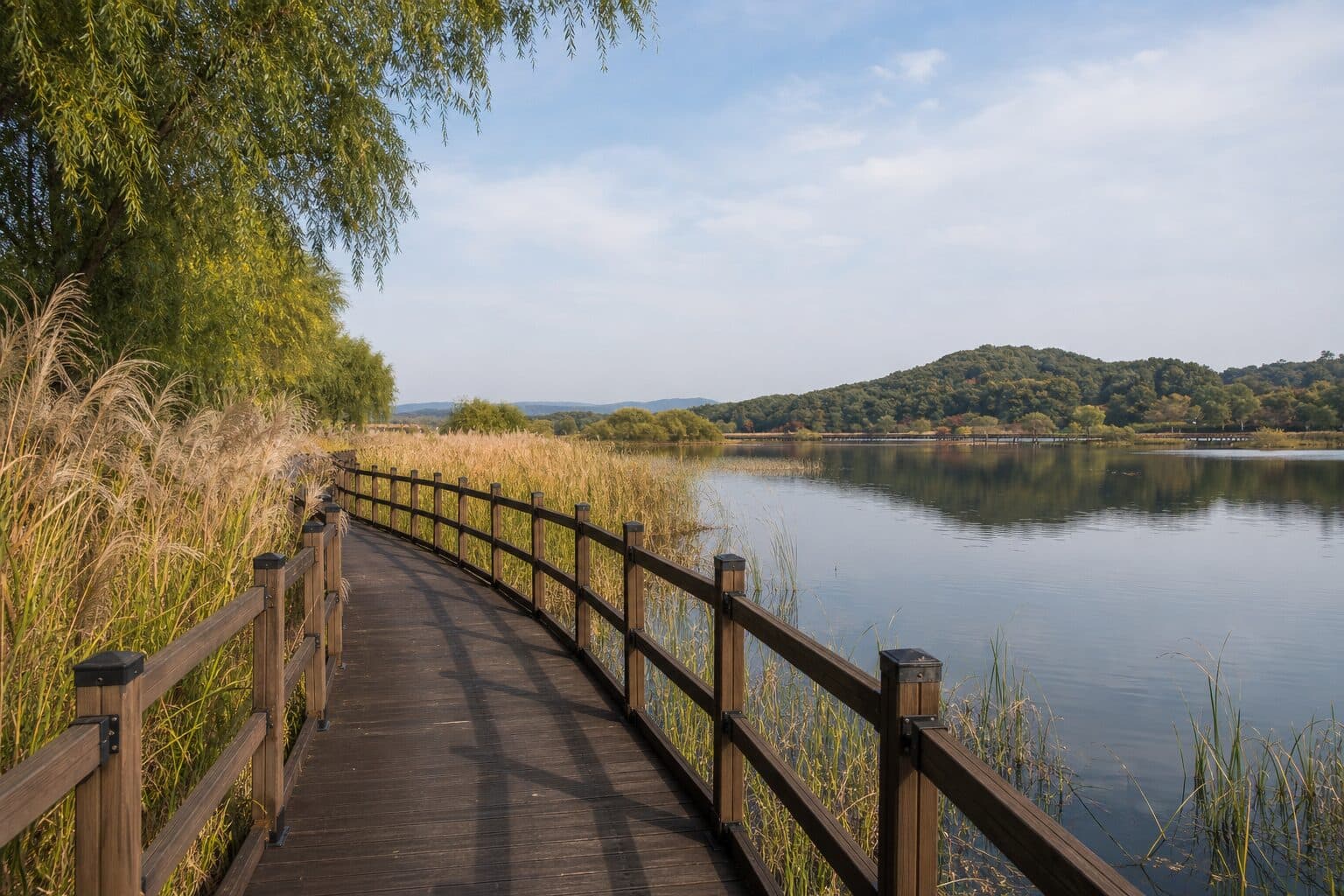
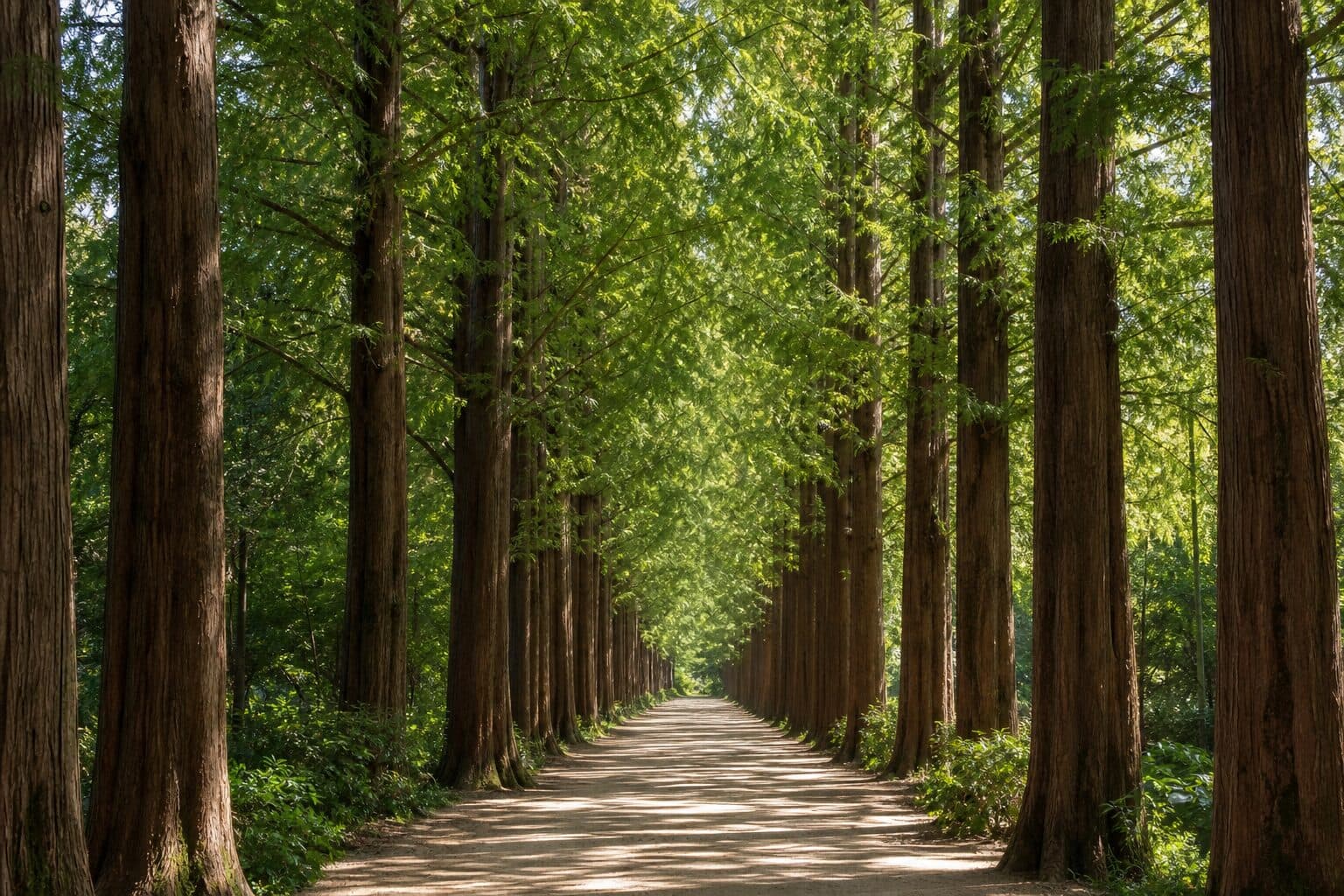
A wetland nature walk along Gwangju Lake. Deck paths, reeds, and a metasequoia lane make it a good nature route north of Mudeungsan.
“An eco-park is remembered by how often you stop, not how fast you finish the loop.”
This is a forest interpreter guiding visitors at Gwangju Lake Eco-Park. He first came as part of a photography club, began memorizing bird names, and has led weekend walks for seven years. “An eco-park is remembered by how often you stop, not how fast you finish the loop,” he says, pointing people toward deck corners, water channels between reeds, and metasequoia shadows. He always carries binoculars, a small bird guide, and a worn pencil, choosing only five observation points per day. He laughs, “When children run, the birds disappear and only the wind remains,” then slows the group down. One autumn, a child lined fallen leaves by color; the interpreter left the row untouched and showed it to the next group as a seasonal specimen.
Philosophy
What this place protects
Eco-walking is slow observation. Walk less ambitiously and stop more often before reeds, water channels, and bird calls.
Behind the Signature
The signature is the contrast between wetland deck and metasequoia lane. After low water edges, the straight tree path changes the lake's scale.
Gallery
Look around
Practical
Car access is easier than transit. Pair with a north Mudeungsan drive or Damyang/Soswaewon route.
A free walking area. In buggy seasons, bring sleeves and water.
Spring shoots, summer lotus leaves, autumn reed and metasequoia color, and winter birds each change the park.